
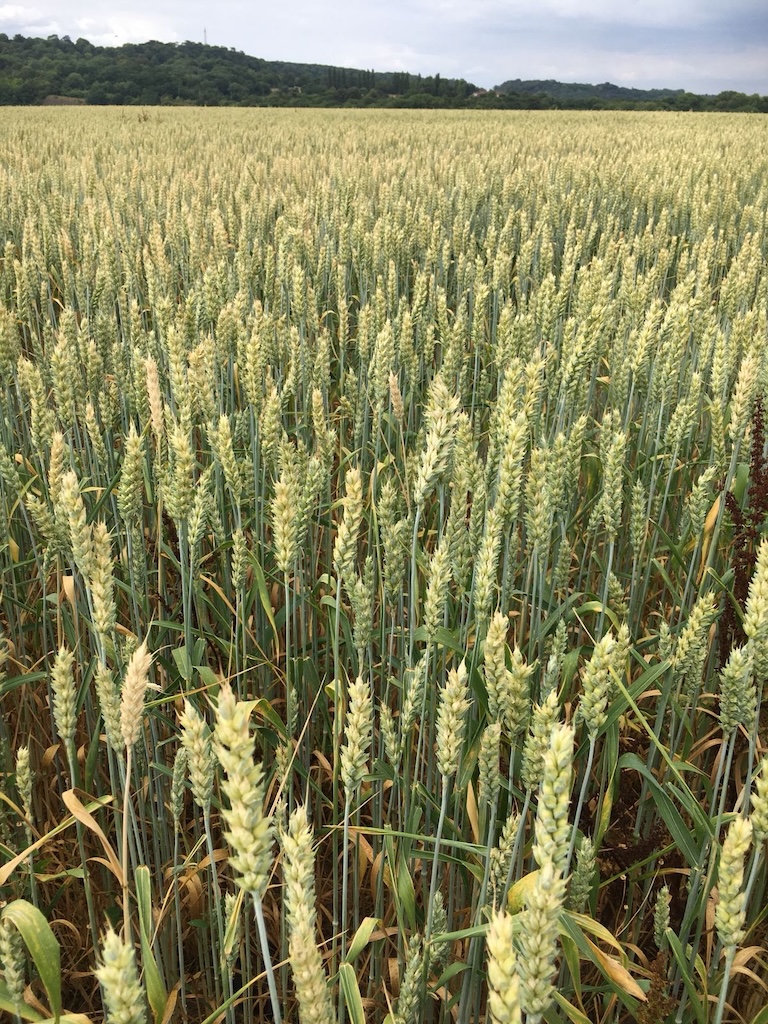
Wholecrop cereals could provide a valuable forage option this season where grass or maize crops fall short on yield or quality, according to Lallemand Animal Nutrition.
The company says wholecrop can help bolster silage stocks, spread risk and give livestock producers more flexibility in a difficult season, but its value will depend on accurate harvest timing and careful clamp management.
Lientjie Colahan, forage technical support at Lallemand Animal Nutrition, says cereal crops have generally performed well so far, while maize crop performance could be more uncertain on some farms.
“If this is the case, wholecrop cereals can provide additional feed value and give farmers a flexible forage option to help build greater resilience into forage plans,” she says.
A key advantage is that cereals can be kept as an option until later in the season. If they are not required as wholecrop silage, they can be crimped or harvested for grain instead.
“It means harvest decisions can be made as the season unfolds, depending on the weather, market conditions and farm requirements, which vary across different regions and farms,” says Mrs Colahan.
For growers planning to ensile wholecrop, Mrs Colahan says grain maturity is the best guide to harvest timing.
“Check how milky the grains are,” she advises. “If the texture is still like cottage cheese, it is too early. When you roll it in your hand, it should be at soft cheddar stage, so it makes a paste.”
At this point, she says, starch deposition should be close to its maximum without the grain becoming too hard or the plant too mature to ensile effectively.
However, the crop can move beyond the ideal stage quickly, sometimes within a week. If the grain is hard but can still be dented with a thumbnail, crimping may be a better option.
“If you cannot dent it without splitting it, then it is best harvested for grain,” she says.
Clamp management is also critical because wholecrop can be difficult to consolidate, Mrs Colahan cautions.
The crop needs to be relatively dry, at more than 35% dry matter, to be mature enough to achieve maximum starch content.
Its hollow, waxy and lignified stems can also make the material harder to compact in the clamp.
“Therefore, the chop length needs to be short, at 1cm to 1.5cm, and the clamp should be filled in thin layers to maximise the force during consolidation,” she says.
Because wholecrop can be challenging to ensile, Mrs Colahan says using a crop-specific inoculant is important.
Lallemand says Magniva Platinum Wholecrop is designed for high-dry-matter crops to support fermentation and help create the anaerobic conditions needed to convert fresh forage into silage.
“A crop-specific inoculant with the right mix of bacteria and enzymes will help the wholecrop stay cooler for longer, reducing the risk of mould development and helping maintain greater stability at feed out,” says Mrs Colahan.
She adds that enzymes in the inoculant help break down fibrous fractions in the stems, improving digestibility and releasing sugars that support fermentation.
Related news: