
With cover crops now firmly established within many arable rotations, growers are increasingly facing a new challenge—how to establish winter cereals consistently into heavy surface residues while maintaining the benefits of low-disturbance farming.
According to Simon Weaving, Sales Director at Weaving Machinery, successful drilling starts with understanding the amount of residue present and choosing the most appropriate establishment system.
“Cover crops have become much more common over the past decade, but they do introduce new management challenges. Heavy residues, reduced soil movement and increased slug pressure all need to be considered before drilling.”
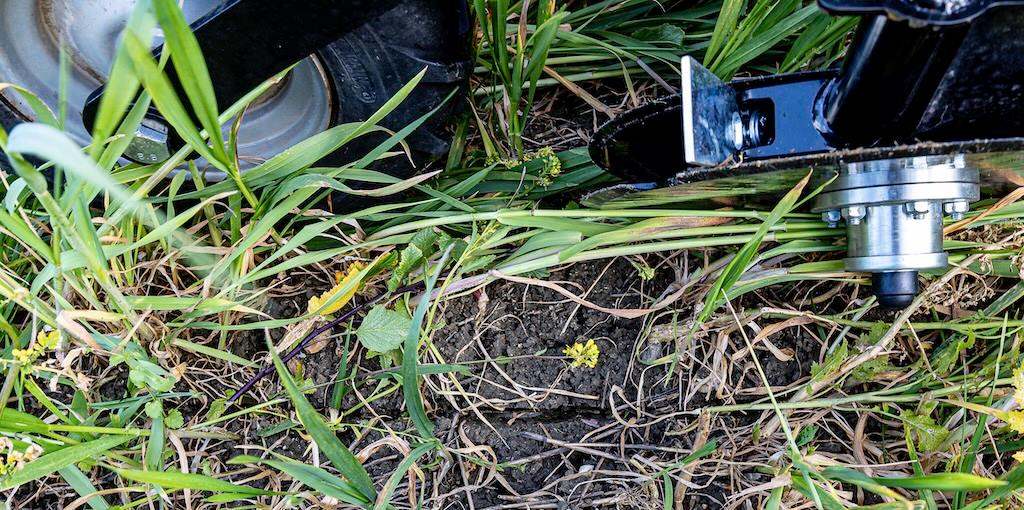
Where residue levels are relatively modest, Simon says the company’s Sabre Tine Drill is capable of drilling directly into standing cover crops, particularly where root systems have helped stabilise the soil. However, as biomass increases, residue management becomes increasingly important.
“In very dense covers, disc drills generally cope better because they cut cleanly through residues without the wrapping sometimes associated with tine coulters.”
For growers committed to tine drilling, a shallow pass with a disc cultivator may help redistribute crop residues before drilling while retaining much of the soil structure. Alternatively, front-mounted cutting discs can slice through standing cover crops ahead of the drill.
Slug management is another critical consideration. Thick residues provide ideal slug habitat, making effective seed slot closure essential to protect emerging crops.
At the Weaving family’s Chadbury Farm, these principles are being put into practice as part of a long-term soil improvement programme. Following years of intensive vegetable production, the farm is rebuilding soil structure using multi-species cover crops including tillage radish, vetch, phacelia and rye before drilling Crusoe winter wheat this autumn.
Half of the wheat crop will be established using a GD Disc Drill and half with a Sabre Tine Drill, allowing a direct comparison of the two systems under identical field conditions.
Rather than identifying a single “best” approach, Simon believes the trial reflects the reality facing many growers.
“Successful establishment comes from matching the drill and cultivation strategy to the soil conditions and residue levels in front of you. Every field is different, particularly where soils are transitioning towards lower-disturbance systems.”
Related news: