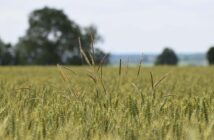

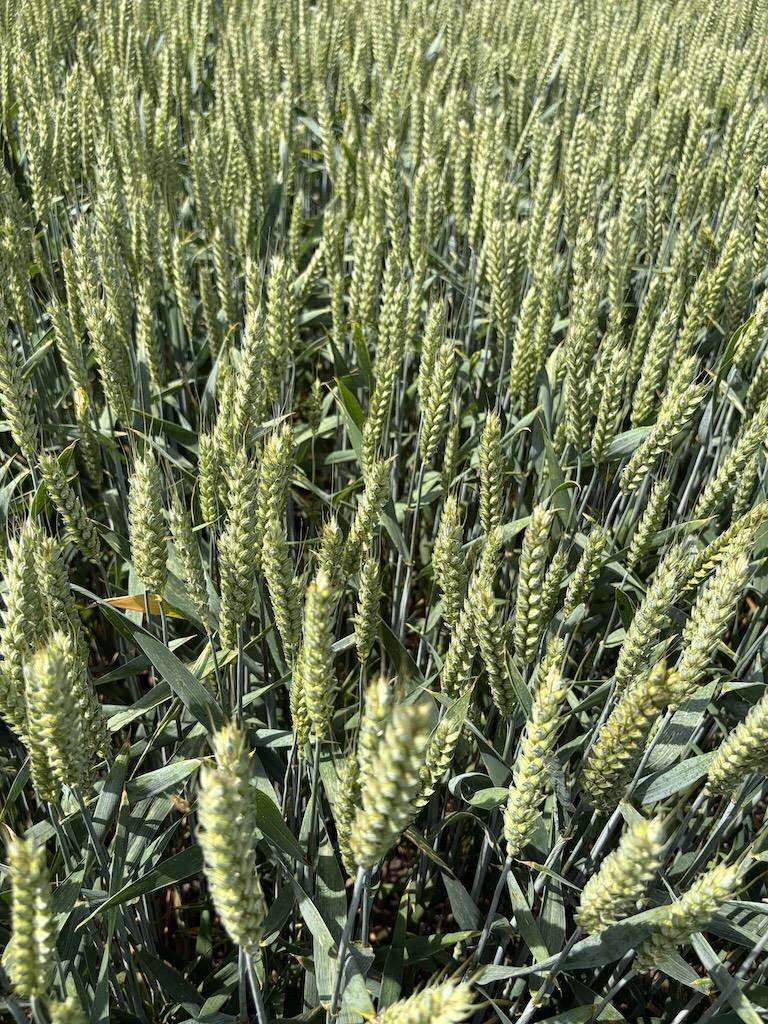
The hard Group 4 variety LG Beowulf has been a stand-out performer at Dennington Hall Farms in East Suffolk, despite the exceptionally hot, dry spring and summer of harvest 2026.
Farm manager Ryan McCormack says the 100 ha block of LG Beowulf, all grown as second wheat, averaged 9.5 t/ha, with some areas nearer 10.5 t/ha over the weighbridge. Specific weight was also strong, at 80-82 kg/hl.
“It looked well through the season, but we were never expecting record-breaking yields given the weather,” he says. “High temperatures during flowering, at 33-35 C, had a massive impact, as did the drought, which made many crops drop a few tillers. So to have 100 ha average 9.5 t/ha, and some areas do a tonne more than that, it has definitely stood out for us this year.”
Limagrain arable technical manager Ron Granger says LG Beowulf has shown consistent performance across seasons, retainingyield and specific weight when conditions are challenging. “The big, bold grain can add weight to a crop, which is especially important with the changeable seasons we’ve been experiencing,” he notes.
The variety combines high yield potential with stiff straw, good septoria resistance, excellent grain quality and orange wheat blossom midge resistance. Mr Granger says its flexibility is another strength, with suitability across UK regions, soil types, sowing timings and rotational positions, including first, second and continuous wheat situations.
While LG Beowulf, like many commercial varieties, is now susceptible to the newer yellow rust strain Yr15, careful monitoring and timely fungicide use should allow it to keep performing, he adds.
At Dennington Hall Farms, input spend was lower this season, largely due to the dry weather. Mr McCormack says more cost-effective chemistry was used to manage yellow rust risk at T0 and T1, while later treatments delivered further savings. Fungicide spend across the wheats was around £94/ha.
Most crops received about 170 kg N/ha in total, front-loaded at the start of the season in anticipation of dry conditions, with 40 kg N/ha applied towards the end of May. With harvest around half-way through at the time of writing, the farm’s winter wheat average was 8.6 t/ha, around 10% below normal because of the weather.
“However, with a relatively low spend on inputs, if we can achieve somewhere closer to a 9 t/ha average across the 700 ha of wheat, I’ll be very pleased,” Mr McCormack says.
This autumn he plans to grow LG Beowulf again, alongside LG Rebellion, LG Defiance and LG Lotus. LG Lotus, grown on a small 10 ha area in the Defra-funded ADOPT Roots of Change trial, averaged 10.23 t/ha, while Crusoe also performed well at 9.5 t/ha.
Related news: