
The future of agronomy is not defined by a single new technology but by how these technologies come together to be utilised by agronomists and farmers. That is the essence of Agrii’s vision for how agronomy will be delivered, which they’ve titled the Smart Connected Farm and is detailed in its most recent Insight Report.
“The smart connected farm is not another platform, it’s not another product, it is a blueprint for farmers to utilise the different agri tech tools available to them in a way that benefits their business,” says Rachel Watling, national marketing manager for Agrii.
“It began as a response to a survey of farmers we did a year ago, which found that they’re under pressure from climate change, increased costs and reduced margins. Rather than take these as a given, we have come up with a new approach that helps farmers overcome the challenges they are facing.”
New technologies entering agronomy, such as satellite sensors, beyond visual line of sight (BVLOS) drones, and AI, mean the role of the agronomist is likely to change over the next few years. It will mean less time spent walking fields and more time assessing and interpreting data to produce more precise recommendations that tailor inputs and improve output, believes Agrii agronomist Kathryn Styan.
“The smart connected farm will bring all of our data together to help agronomists make better decisions, working with farmers to improve their businesses,” she says. “However, regardless of what technology is developed, the relationship with the farmer remains the cornerstone.
“Even if AI plays a bigger part in the process, our company is still about the relationship between the farmer and agronomist – a computer can’t replace that.”
Underpinning the concept is Agrii’s research and development. Dr Ruth Mann, Agrii’s head of integrated technologies, says that testing crop inputs and technology from glasshouse trials, to replicated small plots, and finally commercial scale, means they have confidence in the new solutions from suppliers as they bring them to market.
“We have reviewed and tested over 60 technologies in the last three years,” says Ruth. “Around 20 of them were considered to have good potential for use on farm and so were taken to field scale testing at our digital technology farms. Of those, we have identified five technologies to date that we consider have potential, are scalable, work effectively and deliver value in terms of return on investment.”
A key R&D project has been the digital technology farm network, which has compared a ‘technology-led’ approach to agronomic decision making against the host farmer’s usual programme. It is a proving ground for new agri-tech and helps Agrii understand how they might come together to provide additional insights useful to an agronomist, she adds.
TELUS and Contour integration completes this summer
“We need to be connected across the decision we make on a crop, and to do this, our data needs to be connected,” says Jonny Kerley, senior product manager for Origin Digital. “We’ve seen a huge amount of new platforms coming to the market, whether that is individual machinery manufacturers with their telematics offerings or new agri tech software. However, it is all siloed.
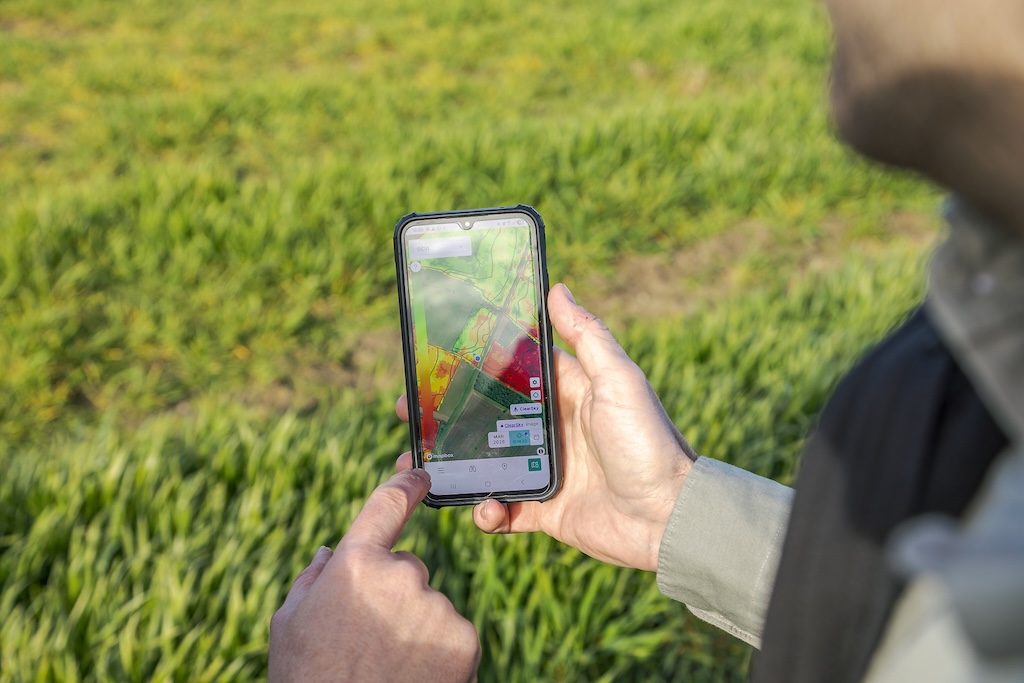
“Contour brings data into one place, and with the aid of decision support tools, uses the data to make better, holistic decisions. That’s why, rather than try to build a platform that does everything, we have collaborated with organisations like TELUS.”
TELUS Agriculture & Consumer Goods is the firm behind Greenlight and Gatekeeper, which have dominated the UK farm management software market since their inception. They are now moving existing users to the new combined TELUS Crop Management system, which is being integrated with Contour. This is expected to be completed in August, meaning core data on fields and farms will be shared seamlessly across both systems without the need for duplicate data entry.
There will also be a new crop protection module in Contour, powered by data from TELUS Label Database, which Jonny says Agrii agronomists will begin using to make crop protection recommendations. It means the two tools will be working off the same core data in the background, much like how different phone messaging apps utilise the same contact information, he explains.
“It means that after the integration, the TELUS and Contour partnership will provide a solution that is at least as comprehensive as any other on the market,” adds Jonny.
Related news: