
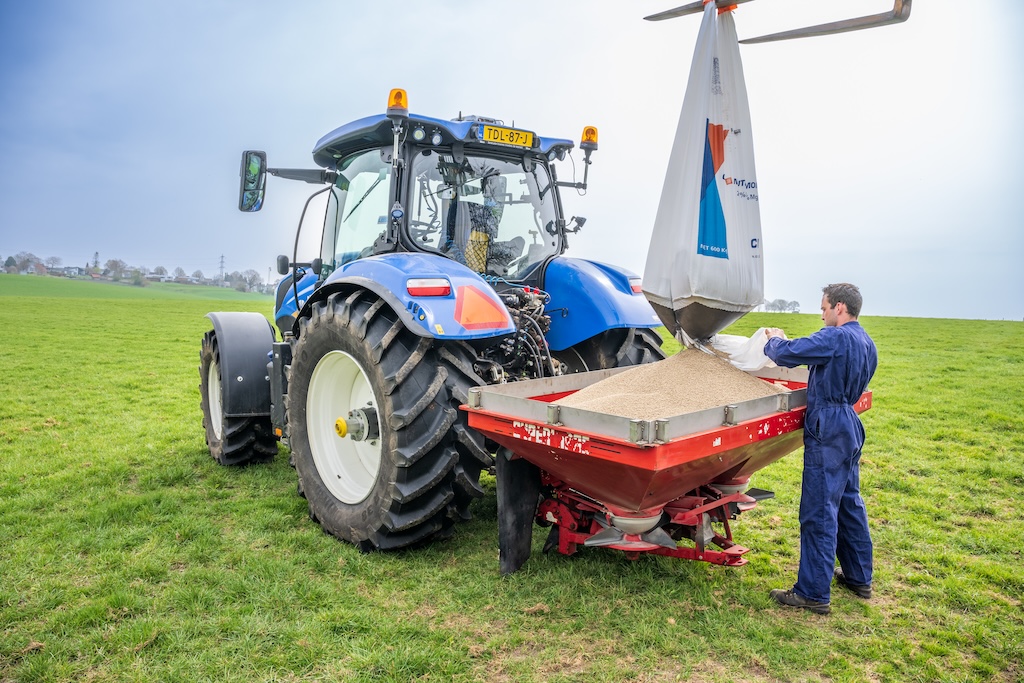
Farmers are being encouraged to look beyond price and nutrient content when buying fertiliser, as pressure builds across UK food supply chains for clearer farm carbon data.
Sam Leadbeater, UK and Ireland sales manager at OCI Global, says growers are increasingly likely to be asked to account for the emissions linked to inputs used on farm, including the fertiliser they apply.
He says fertiliser origin, production method and carbon footprint should now become part of routine buying conversations with merchants, alongside cost, analysis and availability.
“Farmers have more influence than they realise,” says Mr Leadbeater.
“When they ask these questions consistently, it forces the wider industry to respond and encourages merchants, importers and blenders to prioritise products with stronger environmental credentials.”
He adds that the first step towards reducing emissions does not need to involve major investment, but starts with understanding the footprint behind the products already being bought.
“Two fertilisers can look identical on the shelf, but their production footprints can be vastly different depending on the site, the energy source used and the efficiency of the manufacturing process,” he says.
Fertiliser can pass through several stages before it reaches farm, including manufacturing, importing, blending and distribution. Mr Leadbeater says that can make its true carbon footprint difficult to identify unless growers ask for clearer information.
“Nitrate fertilisers produced in efficient western European facilities, particularly those using natural gas-based production and responsibly sourced ammonia, can offer lower-carbon options compared with products made using coal-based energy or less efficient ammonia production,” he says.
OCI Global says its approach to responsible ammonia sourcing and product traceability is designed to give customers clearer information about where fertiliser has come from and the carbon footprint associated with its production.
Mr Leadbeater says the company’s calcium ammonium nitrate production has one of the lowest carbon footprints globally, based on standard production methods, and that further reductions are possible when lower-carbon raw materials are used instead of natural gas.
For farmers looking to reduce the embedded emissions in their crop production, he says asking where fertiliser has come from is a practical and immediate starting point.
“The more that happens, the more pressure there is on the whole supply chain to be transparent and bring lower-carbon options through to farm,” he concludes.
Related news: