
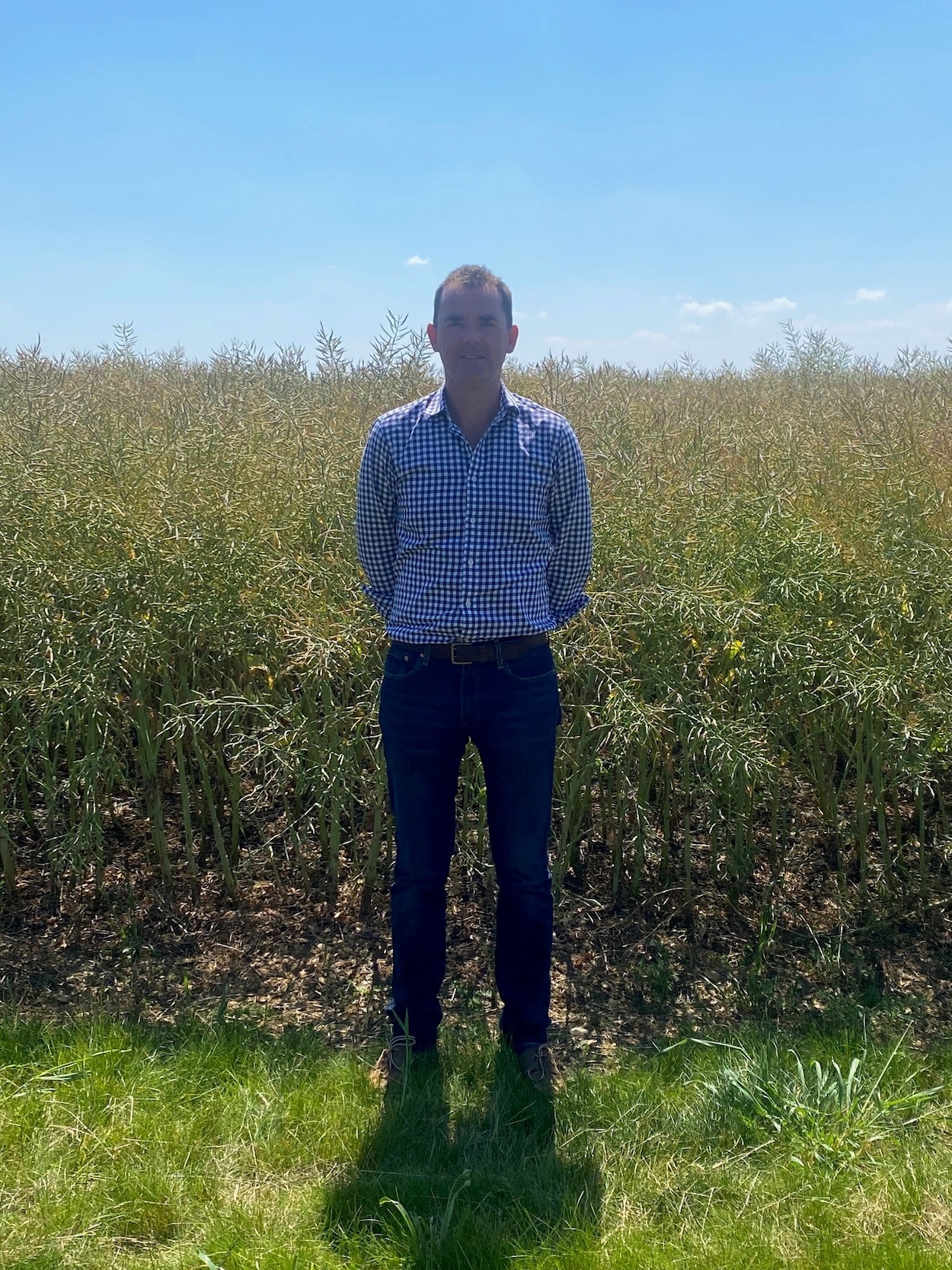
- Farmer James Dunlop farms 1200-acre Grange Farm, Wittering between Wansford and Wittering and is trying out the conventional rape variety Pinnacle this year in the expectation that it will prove to be the new Campus
James explains that the farm used to be a riding school and still has stabling for over 70 horses plus first-class livery, training facilities, arenas for dressage, and jumping . The grazing for the horses is on sand and limestone brash which is unsuitable for arable farming. He has also introduced 2 dog walking fields as a further diversification. He farms around 900 acres of arable land but putting 700 acres through the combine with the rest mid-tier/SFIoptions,largely limestone brash soils,” he says.
He uses a basic 5-year rotation – wheat, followed by a second cereal (winter barley or rye) followed by oilseed rape, wheat, and combinable peas. ” The soil we farm is largely brash, “he says.
James has been a loyal Campus grower for the last 9 years but has been looking with his advisor Doug Balderson for a new and better Campus. “I like to grow conventional oilseed rape varieties as I like to save my own seed for economic reasons. Conventional variety seed is much less expensive than hybrid seed, you can save your own seed and you drill it with a higher seed rate which I think helps with the problems of slugs and flea beetle. Pinnacle is the top conventional variety in the AHDB Recommended variety list this year, so it caught my eye. When selecting an oilseed rape variety, I chose high yield and oil content as my top criteria and Pinnacle fits the bill here. It has outyielded Campus, I understand.”
Neil Groom, general manager of Grainseeds reports “Pinnacle has performed consistently well in official and private independent trials and has outperformed the popular conventional variety Campus as well as many hybrids year after year.”
In National List 1 trials, Pinnacle yielded 108% which was 5% more than Campus. In NL2 trials outperforming Campus by 4%, yielding 104% – it was the top conventional variety. In AHDB RL trials last year it yielded 103% gross output in the east and west regions (with 104% treated yield) and 101% in the North (with 102% treated yield), taking the Number 1 spot for conventional varieties in both regions. Pinnacle has a good oil content of 44.3%.
” Pinnacle is not only the number 1 conventional variety but it is bred in the UK by independent plant breeder, Mike Pickford. Mike says “as the trials show, a top performing conventional variety can easily outperform some hybrid varieties. My breeding philosophy is using a” Component analysis technique” for a high harvest Index. My breeding philosophy is simple and that is to improve individual yield components, such as increasing the size of the seed. Pinnacle has seed with a thousand grain weight between 6.5 to 7gms compared to Campus at 5 to 6 gms. I also try to maintain clean green stems when ripening allowing more efficient photosynthesis during the ripening grain filling process.”
The second feature James Dunlop uses when choosing a rape variety is positive agronomic factors such as disease resistance and standing power. Pinnacle has similar diseases resistance to Campus but in addition has Verticillium resistance. It has an 8 rating for resistance to lodging and a 9 rating for standing power.
Mike Pickford adds “In terms of ripening, Pinnacle and Campus are both medium to early. This means OSR harvest is completed before first wheats are ready to be cut and following crops can be planted in good time, while the rape seed harvested is already in storage.”
James Dunlop and Doug Balderson say that 50 acres of Pinnacle is looking well and has done all the way through, but the real result will be at harvest. “Will Pinnacle outyield the 2 other rape varieties that we are growing – Annika (another conventional) and Attica (a hybrid).?” They both think Pinnacle has the potential.
Related news: