

- The challenges around sustainable food production mean there’s a growing need for collaboration across the food value chain.
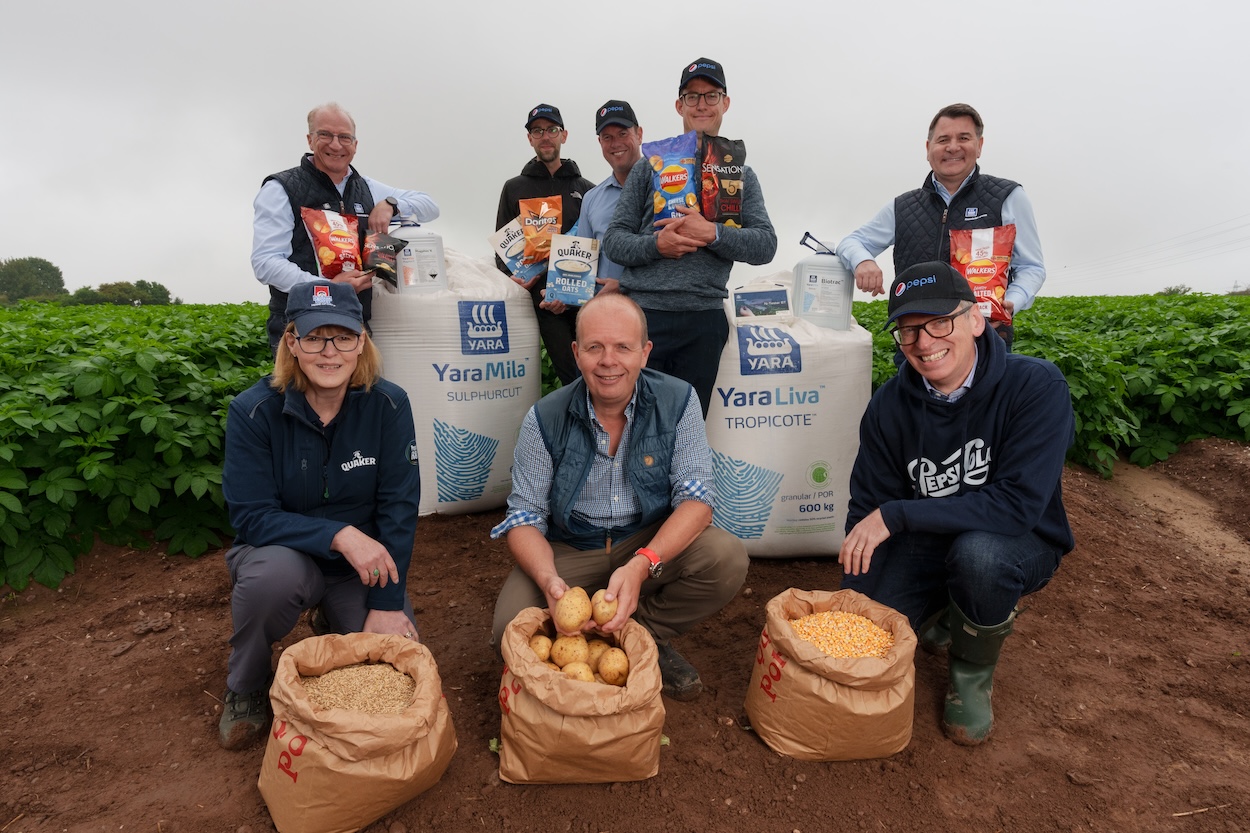
- Yara has recently formed partnerships with Simpsons Malt and PepsiCo Europe aimed at decarbonising the food chain.
- Yara is taking a holistic approach to delivering lower carbon solutions within the food value chain, and successful collaborations are already happening.
The need to achieve carbon reduction targets is driving some innovative thinking about how parts of the food value chain might work together in the future. Dale Turner, Head of Value Chain Partnerships at Yara UK, discusses the need for collaboration across the supply chain, establishing partnerships, and Yara’s holistic approach to meeting the challenges that agriculture is facing.
Challenges around producing food sustainably are front of mind for all the key players in the supply chain from fertiliser producers to farm businesses, and food companies. While each has a crucial role, there’s a growing need to work together to solve current and future issues. “We have spent time as a company gathering insights and feedback from across the industry, which has certainly confirmed that there is an appetite to start exploring new ways of working and new business models. That’s why we have started taking steps to focus on this new and exciting part of the market,” says Dale.
Yara has seized the opportunity to work more closely with others in the supply chain. The company has recently formed partnerships in the UK with family-owned malting company Simpsons Malt and food and drink giant, PepsiCo Europe. As part of the collaboration with Simpsons Malt, Yara is helping to develop low carbon barley while the PepsiCo initiative is centered around providing farmers with crop nutrition programmes to help decarbonise the food chain.
Buy-in from all stakeholders, particularly farmers, is the key to building successful partnerships and developing new ways of working. “Farmers are vital to successful partnerships. They’re the ones who are producing the crops and having to deal with challenges in the field. I think for any initiative to be successful, it’s important that all the key stakeholders are involved and understand their place and position with any partnership. There has to be a win-win scenario for the parties involved too; it has to be truly collaborative if it’s going to work,” adds Dale.
For farmers in particular, working in partnership with others across the supply chain could to some extent insure against the turbulence caused by factors such as changing weather patterns. Having multiple parties involved in a partnership from farming up to food company level means the discussion goes beyond individual concerns and becomes more open and collaborative. This facilitates the development of innovative approaches and solutions to address and mitigate the risks facing UK agriculture.
What Yara is bringing to the table in its partnership discussions is a holistic approach to delivering a lower carbon solution within value chains. “We offer a full solution, whether through our climate change range of low carbon fertilisers, our YaraVita micronutrient offering, our YaraAmplix biostimulant offering, or through the work we’re doing within our organic-based offering. That is then backed up with our agronomic knowledge, digital tools and services,” says Dale.
Alongside these solutions, knowledge-sharing and engagement with others in the supply chain play an important role in Yara’s plans for a more collaborative future. “We’re open about the areas we’re working on, and we’ve been successful so far in the initiatives where we’ve started to work closely in a partnership approach, and we’ve begun to tackle some of those issues together.
“We feel very confident as a company in terms of bringing a deliverable, practical solution to the table to start tackling a range of issues that UK agriculture faces. That’s something we’re putting into practice already. We’ve delivered the first tonnes of low carbon fertilisers into the UK this year. We are making a positive impact through the various partnerships and that’s something we will continue to develop as an industry leader,” concludes Dale.
Related news: