
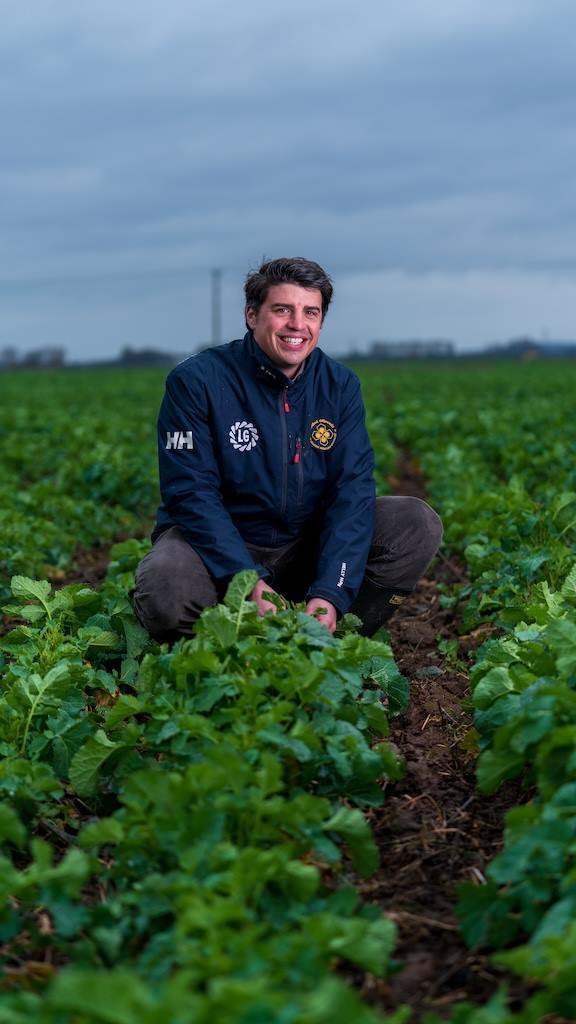
Oilseed rape is set to be Lincolnshire grower Ben Jackson’s most profitable crop this year, after a refined approach to rotation, establishment and variety choice helped deliver well-above-average yields.
But despite the strong performance, Mr Jackson says he will resist any knee-jerk expansion of the crop for 2027, preferring to maintain oilseed rape at no more than one year in five across the farm’s rotation.
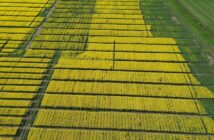
At Low Farm, Somerby, J.J. Jackson Ltd grew 480ha of oilseed rape for harvest 2026, cut between 11 and 17 July. The crop, split mainly between Limagrain Field Seeds hybrids Attica, LG Adapt and LG Avenger, averaged 4.5t/ha at 7.5% moisture, with oil content of 45.5%.
“We’re taking a long-term view with our cropping, and that includes oilseed rape,” says Mr Jackson. “Reducing its frequency in the rotation has certainly helped us achieve better and more consistent performance, particularly in combatting flea beetle, as has being more selective about the fields used to grow it each year.”
He adds that maximising the distance between previous rape crops and new drilling remains an important safeguard, given uncertainty over how far cabbage stem flea beetle will migrate within a farm.
The approach reflects several management principles promoted by the OSR Reboot Programme, including spatial separation, careful field selection, hybrid variety choice and establishment according to conditions rather than calendar date.
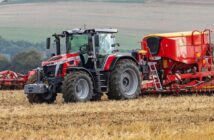
Patience at drilling is central to the system. No seed goes into the ground until moisture and soil temperatures are right, while a Sumo LDS places seed alongside liquid fertiliser to support rapid establishment.
“I’d rather wait until September than go earlier in the wrong conditions,” Mr Jackson says. “Hybrid vigour is a big benefit here, as the crop requires less time, so there is no real pressure to drill early.”
Lower seed rates are also being used to give vigorous plants more space, with the aim of achieving a crop that can root quickly and grow away from flea beetle pressure.
Inputs are kept broadly standard, with pre- and post-emergence herbicides, some blackgrass control, and spring nitrogen and sulphur split over three applications. Much of the land receives farmyard manure, with P and K applied only where needed.
“We’re looking for the crop to kick on again in the spring, and the hybrid varieties do just that, developing a thick stem within robust and resilient plants,” Mr Jackson says.
With high-quality oilseeds now safely in store, he says the priority is to maintain discipline: keeping acreage sustainable, waiting for optimum establishment conditions and continuing to draw on the latest hybrid breeding technology.
Related news: