

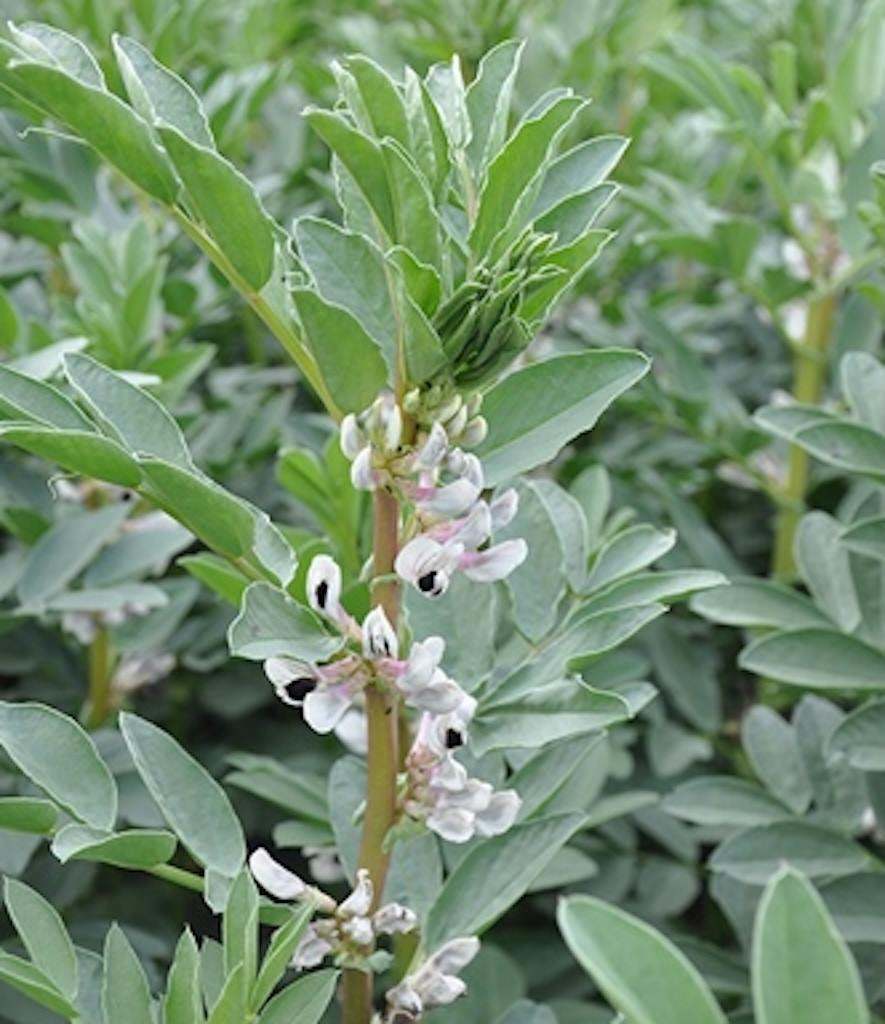
The addition of aclonifen to the herbicide options available for beans gives growers another tool for managing difficult grassweeds, although good establishment and careful programme selection remain important.
Winter bean area is expected to be lower this season as oilseed rape regains ground in UK rotations, but beans remain an important break crop for many arable businesses. Grassweed control can be particularly challenging because of the relatively limited range of available herbicide actives and restrictions governing their use.
ProCam agronomist Paul Gruber says crop competitiveness should remain at the centre of any grassweed management strategy.
“One of the core management strategies when tackling difficult grassweeds such as blackgrass, ryegrass and brome is to ensure the crop is as vigorous and competitive as possible during its early phases of development,” he says.
Poor establishment can compound the problem by reducing both crop competition and herbicide performance. Late-drilled beans and compromised seedbeds can therefore provide conditions in which grassweeds establish strongly and produce significant quantities of seed.
Additional chemistry
The introduction of Proclus, containing 600g/l aclonifen, provides another option for inclusion in bean herbicide programmes.
“The inclusion of Proclus certainly gives stacked herbicide programmes an extra edge, not just in terms of grassweed control, but also versus brassica weeds,” says Gruber.
However, he stresses that the additional chemistry does not remove the need for cultural measures.
Growers should aim for early establishment and appropriate plant populations to increase crop competition and reduce the opportunity for resistant grassweeds to produce seed.
Drilling beans at greater depth could also provide an opportunity for a pre-emergence glyphosate application to control late weed flushes before the crop emerges.
Gruber suggests that Proclus combined with either Nirvana, containing imazamox and pendimethalin, or Kerb, containingpropyzamide, could provide robust programmes against grassweeds.
However, he warns that product combinations need to be considered carefully. The Proclus/Kerb combination, for example, could leave a gap in broadleaf weed control, while adding further active ingredients can increase the risk of crop effects.
“The safest strategy is therefore to consult with an experienced agronomist to ensure the chosen stack of products or actives is going to be effective without causing any undue damage to the crop,” he says.
The message for bean growers is therefore much the same as for other crops facing difficult grassweeds: chemistry can provide another layer of control, but good establishment, competitive crops and an integrated approach remain important for limiting weed populations and subsequent seed return.
Related news: