
With the loss of reliable chemical controls, experts at Scotland’s Rural College (SRUC) are advising farmers to start planning now if they want to limit leatherjacket damage to crops and grassland.
The timely advice follows the EU ban on Chlorpyrifos – a major insecticide used to control the population of the destructive grubs. The loss, in January of the only permitted insecticide effective against leatherjackets on agricultural land has been a major blow to Scottish farmers. Many feel powerless to control the damage done to crop roots by the larvae of crane flies or daddy longlegs.
But SRUC experts are emphasising that farmers actually can do something to control the pests – provided they are more vigilant during the autumn months.
Assessing grub levels in grassland in key fields between November and February will allow levels to be established before the grub is capable of doing a lot of damage. This is crucial before any spring-sown crops are in the ground – as the grubs will feast on these.
Professor Davy McCracken, SRUC Ecologist, advises: “Survey key fields to know what densities are present well in advance so the results can inform management decisions.
“Farmers will have options once they know the risk present in each field. The impact of any uncontrolled leatherjacket population on a farm will depend on the population density of the grubs, the proposed use of the field and – importantly – at what point the grower realises that a damaging level of grubs is present.”
Researchers stress that if high levels of grubs are found within a particular field farmers can decide if it is worth continuing to use that land for forage production or concentrate their efforts in another field with lower grub densities.
If the highly infested field is supposed to have a spring crop after grass Davy McCracken advises farmers to consider the practicality and feasibility of carrying out additional cultivations before sowing – or alternatively focus crop growing in a different field with lower levels of grubs.
The annual 2016 SRUC survey of leatherjacket populations shows a “generally average year” however 50% of the fields sampled contained grub populations in excess of 0.6 million/ha. The level of risk can vary between areas – with a higher risk in Bute, Dumfriesshire/Kirkcudbrightshire, Stirling/Perthshire and Wigtownshire.
Davy McCracken adds: “Now is the time to act and plan for the future before the threat of larvae becomes high in all areas. A density of over 0.6 million grubs per ha in a grassland field is, if left untreated, likely to result in severe damage to any cereals subsequently sown into that field in the spring.”
Assessment of leatherjacket infestations in individual fields can be undertaken as a chargeable service; details of costs are available from SAC Consulting’s local offices.
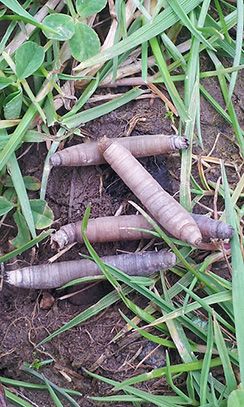
Photo caption:
Experts at SRUC advise farmers to start planning now to limit leatherjacket damage to crops and grassland.