
- This season has been all about extreme rainfall so far, however, recent warmer, showery conditions have seen winter wheat crops motor on, and, in tandem with this, disease pressure is increasing
The unprecedented rainfall, which left ground impassable, has meant that many spray programmes have been disrupted, with T0s missed, and in some instances, this was followed by a compromised T1, leaving wheat crops exposed and Septoria becoming visible even on the stronger varieties.
So, what does this mean for the rapidly approaching T2 spray application?
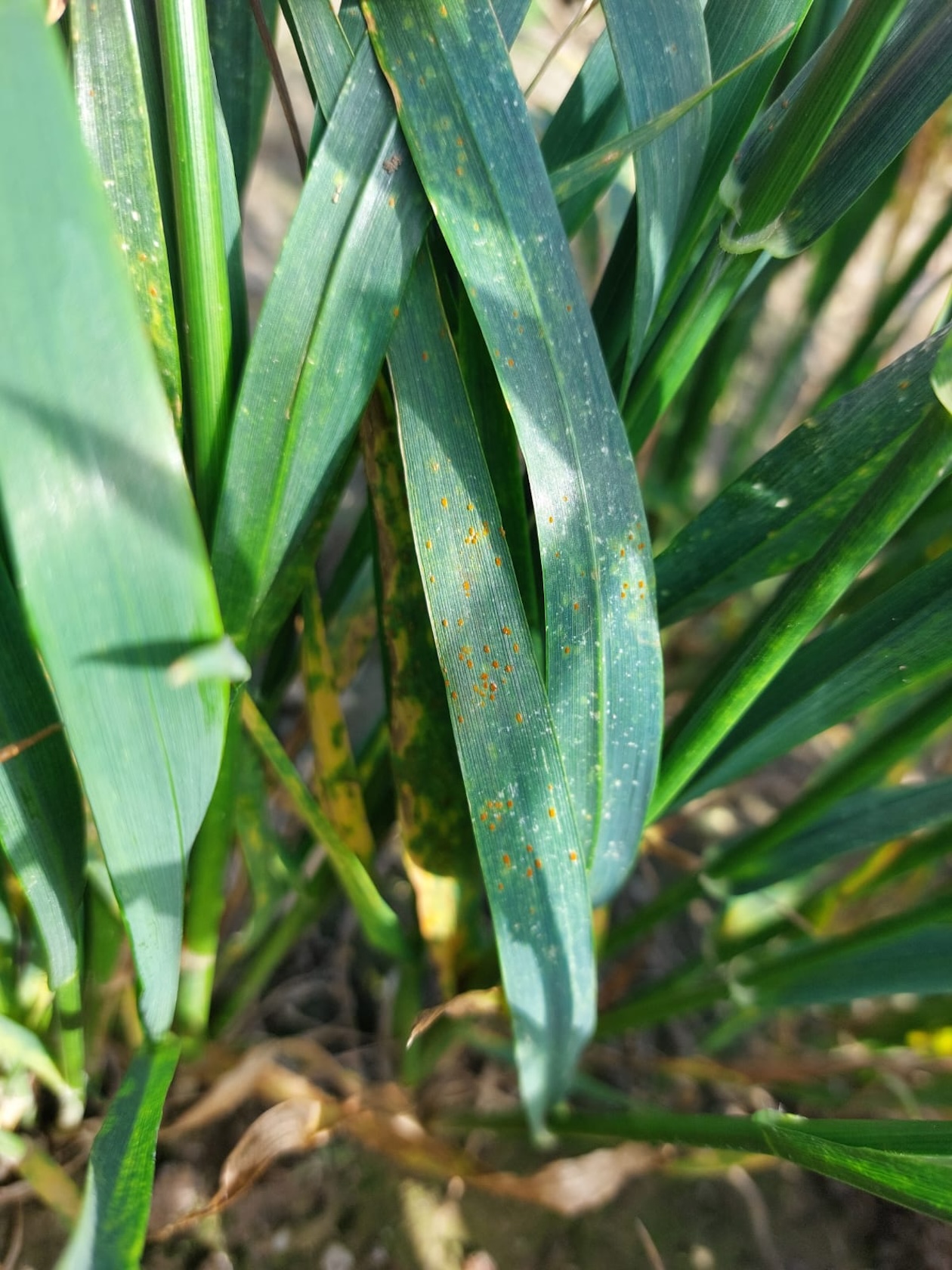
It may be that it’s not only Septoria that growers have to contend with, as Rebecca Joynt, Senior Consultant in Crop Pathology at ADAS, explained, “This is a season to keep a very close eye on crops. The wet autumn created a divide in terms of crop drilling dates. We know that early drilling is a risk factor for Septoria but the mild humid conditions have heightened the risk. The mild spring has also presented yellow rust with favourable conditions, especially in those crops which were sown towards the end of the drilling season and susceptible varieties. We’ve also been receiving reports of brown rust since mid-April in the south and east, which is exceptionally early.”
This is certainly the scenario that Hugo Pryce, BASF Agronomy Specialist for the east of England, is seeing. He said, “Septoria is creeping up the canopy, yellow rust is quite easy to find and brown rust is also being picked up in susceptible varieties. As temperatures continue to rise, so the disease pressure mounts. “
Colin Mountford-Smith, BASF Agronomy Manager for central midlands and north-west England, said, “Growers need to start thinking seriously about a robust T2 as T1s may not have been as robust as in previous years because of cost sensitivities, especially in crops which appear poorer. However, there is an acknowledgement from agronomists that growers should be looking after anything that is reasonable plus, not just the good crops. Having got the crops through to this point and already applied other inputs, such as nutrition, PGRs and weed control, a lot of the total spend has already happened so now it is a case of protecting yield to harvest.”
Keeping the top leaves clean is key to maximising yield potential and the T2 flag leaf application is critical to this. Hugo said, “It’s highly likely that growers may find they are in a curative situation, on leaf 2, and potentially leaf 3, especially if T1 timings have been compromised and crops are carrying a reasonable amount of Septoria.
Proven over several years in high-pressure disease situations, Revystar XE (Xemium and Revysol) is tried and trusted as a robust and reliable broad-spectrum fungicide for the control of Septoria, yellow rust and brown rust.
At the T2 timing, 1.0 l/ha Revystar XE delivers consistency with strong curative and protectant activity, which will be particularly important in this year’s variable crops where leaf emergence will not be uniform. And, at a lower price point than last season, Revystar XE also delivers value.”
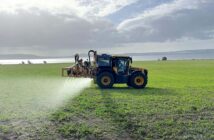
In a catchy season like this one, it is critical to maximise sprayer efficiency, as Hugo explained, “Revystar XE offers excellent tank mix compatabillity and the option to drop water application volume from 200 to 100 l/ha, which can increase the area sprayed in a day by around 34 ha on a typical farm. Revystar XE’s fast uptake also ensures excellent rain fastness.”
For Rebecca, Revystar® XE’s role in programmes is justified on two counts.
“Revystar XE offers good control across a range of diseases and the fact it’s main Septoria activity is driven by an azole also means it offers an alternative mode of action (MOA) and so contributes to resistance management too. Managing resistance is largely about using different modes of action in sequences and in mixtures,” said Rebecca. “And this season growers have more choice than they’ve had for many.”
Hugo added, “Whilst MOA diversity is strongly welcomed and encouraged, it’s important to note that all new actives entering the market in recent years are largely partnered with prothioconazole, an azole with weak efficacy against Septoria, putting additional resistance pressure on the actives. Revysol is by far the strongest azole for Septoria control and its inclusion in the programme will support actives at higher resistance risk.”
Related news: