
A restored 1968 CLAAS SENATOR has returned to harvesting, providing a striking demonstration of how combine technology has transformed cereal production over the past seven decades.
The machine is no ordinary classic. It is the 200,000th combine ever built by CLAAS and was originally presented by company founder August Claas to Scottish farmer John Steven in 1968, marking an important milestone in the manufacturer’s history.
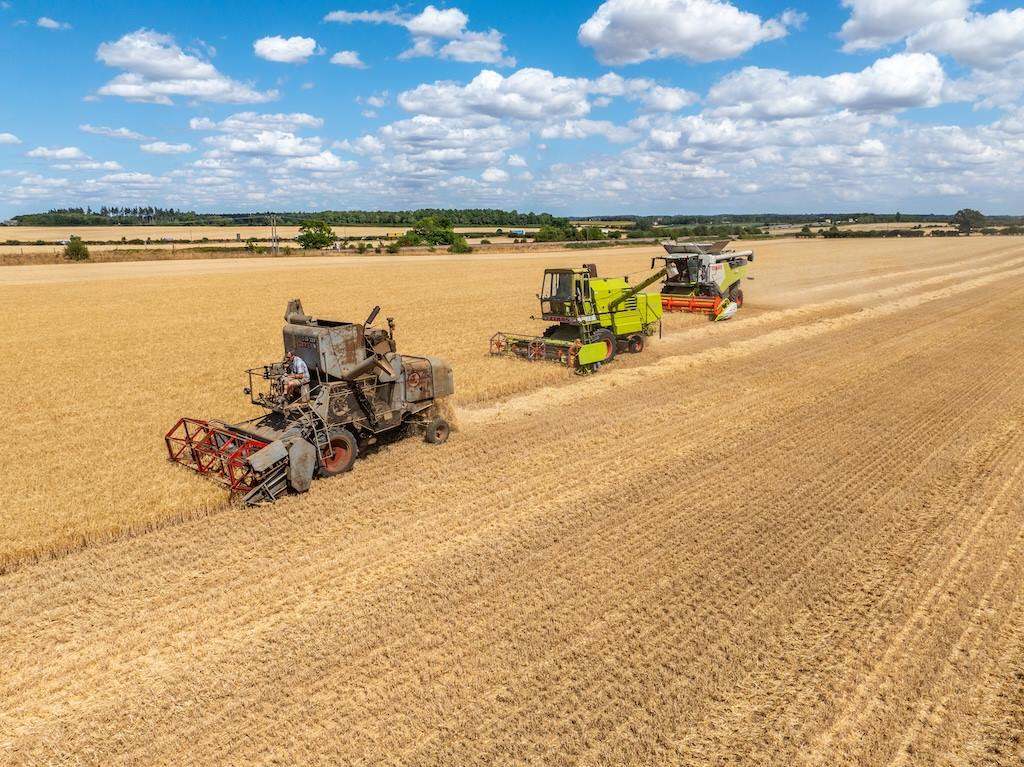
Following a sympathetic restoration by the CLAAS UK Technical Service team at Saxham, the combine harvested around 20 tonnes of wheat during a five-hour demonstration in Suffolk before joining a unique gathering of three generations of CLAAS combines.
Working in the same wheat field were a 1953 CLAAS SF, the restored SENATOR and a modern TRION 720. The comparison illustrated the scale of progress made in harvesting technology, operator comfort and output.
Where the early SF harvested around four tonnes per hour, the latest TRION achieved close to 40 tonnes per hour—a tenfold increase in throughput. Alongside greater capacity, today’s combines also offer improved grain quality, lower losses, precision guidance, yield mapping and remote machine monitoring.
Even the restored SENATOR reflected the changing nature of modern farming. Although built almost 60 years ago, its work during the demonstration was tracked live using the CLAAS connect digital platform, linking one of the company’s earliest milestone machines with today’s connected farming technologies.
For arable growers, the demonstration was a reminder that while harvesting principles remain largely unchanged, advances in machine capacity, automation and precision agriculture have fundamentally altered how cereal crops are established, managed and harvested.
The event also highlighted the importance of long-term manufacturer parts support, with many original components sourced through the CLAAS World Parts Centre to return the historic combine to working condition rather than simply placing it on static display.
Related news: