

The early sowing of wheat has possibly lost favour and indeed is frowned upon by many growers and agronomists who have moved away from this concept due to ever increasing blackgrass levels on farms.
Nevertheless, growers without blackgrass problems still have the opportunity to, and can continue to benefit from, drilling crops early, says Ron Granger, technical arable manager for seed breeders Limagrain UK.
“Although growers in the main have moved away from the extreme early drilling scenario of early to mid-August practiced by many a decade ago, earlier drilling which is now considered to be before mid-September does have benefits – notably in taking advantage of mild autumn weather to establish crops before the weather closes in for the winter. “
Early drilling however does have significant risks recognises Mr Granger, and is a major test for both grower and variety both in terms of crop management and variety suitability.
“Early sown crops will be taller and hence carry a higher risk of lodging, and disease susceptibility will certainly be higher. It is thought that a variety’s ratings for both lodging and disease susceptibility can be reduced be one point on the AHDB Recommended List.”
Most commercial varieties currently available are products of breeding programmes and varietal testing that is targeted at traditional sowing dates in October. Although the AHDB does produce data on earlier sowing dates, this is quite limited, he points out.
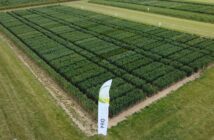
At Limagrain we evaluate lines in more depth to ensure they meet the specifications required for early drilling and this is done through additional plot and field trials both internally and externally with partners, to ensure a variety is fit for purpose.”
“Of course this work is carried out over several seasons as it is not in the interest of a breeder to push a variety into such a high risk situation without it being fully evaluated.”
In order for a variety to be deemed suitable for the earlier drilling slot, it should ideally have a number of key agronomic characteristics, highlights Mr Granger.
Good straw strength
Early sowing does tend to produce plants with a greater biomass, due to increased stem length and extra tillers per plant which in turn increases lodging pressure. Mr Granger advises a good split PGR programme at the key crop development phases of stem elongation.