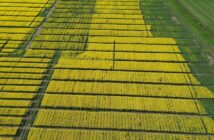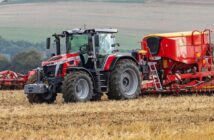


- Crop rotations have proved critical to improving soil structure and reducing weed burden for five northeast farmers, who have come to the end of a five-year knowledge exchange programme, looking at enhancing farm soils
The Soil Regenerative Agriculture Group (SRAG) was launched in 2019 by the Farming For a Better Climate (FFBC) team, part of SAC Consulting, and brought together five farmers to explore a range of management techniques, treatments, crops, and rotations, to help build soil resilience.
The group, which consisted of Ross Mitchell, Douglas Ruxton, Ben Barron, James Hopkinson, and Hugh Black, focused their work around five core themes: minimising soil disturbance; providing constant soil cover; keeping a living root in the soil; integrating livestock and maximising crop diversity.
Although all five are at different stages in their regenerative farming journey, they all agreed that getting ‘back to the basics’ and focusing on good crop rotations was key to improving soil health and managing grass weeds.
Soft fruit grower Ross Mitchell, of Castleton Farm, in Aberdeenshire, joined SRAG at the beginning of his venture into regenerative farming.
“We decided five years ago to transition into the regenerative space and joining the group really aided our progression on that journey,” Ross explained. “A lot of people think it is about a machinery change policy or deciding not to plough, but really it is a mindset change.
“We have explored the five principles of regenerative farming as part of this process, we introduced a wider rotation mainly to help control grass weeds, introducing legumes as a break crop, mainly beans and some peas, which has added much needed diversity into the rotation. We also have embraced no-till and cover crops, which is helping with the structure of the soil, has reduced compaction and by not disturbing the soil, we are continually reducing our weed burden.
“We wouldn’t be doing this system if it wasn’t financially viable, it must stand on its own two feet and with the cost of fuel and machinery going up, we have found this is a far more resilient way of farming that reduces our inputs and costs.”
Related news: