
- An international research collaboration led by the John Innes Centre has used innovative genomic discovery methods to show how we might halt the emerging and highly destructive disease, wheat blast
In experiments researchers identified two genes which protected experimental wheat plants against exposure to the fungal pathogen Magnaporthe oryzae which causes blast.
To make the discovery, the team used a technique called AgRenSeq, which allowed them to search for useful genes among a panel of heritage wheat varieties called the Watkins Collection. They also searched among wild grass relatives of wheat.
The Watkins Collection was collected from around the world in the 1930s and consists of more than 300 wheat lines or landraces containing disease-fighting diversity that existed in wheat before intensive breeding. Such collections of locally grown crops have, along with wild grass relatives of wheat, become a vital resource for researchers seeking genes which protect modern crops from emerging diseases.
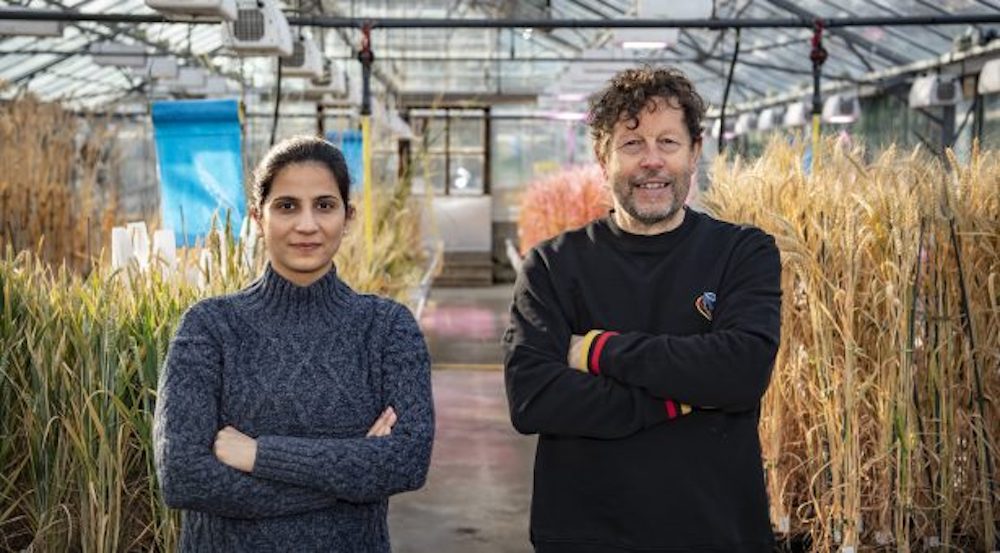
Professor Paul Nicholson, a group leader at the John Innes Centre said: “We have made an important discovery on an emerging disease that threatens global food security and, in the process, highlighted the power of the Watkins Collection and the AgRenSeq genomic toolkit. Now our role is to interact with organisations such as (global research non-profit) CIMMYT to provide information on additional resistance genes and enable them to ensure that their breeding materials contain these genes so that they are protected against blast.”
To identify resistance genes, researchers tested seedlings and spikes from the Watkins collection with specially modified isolates of the blast pathogen to identify which plants were resistant and which were susceptible to the fungus.
Then they used AgRenSeq, the gene discovery technique developed by Dr. Sanu Arora a group leader at the John Innes Centre, to identify sections of the genome which showed gene activity in resistant plants.
This led to the identification of a resistance gene candidate Rwt3 which protects wheat by regulating an NLR gene. In plants NLR genes operate by encoding defensive proteins that detect pathogen effector molecules and trigger a protective response, like antibodies protect humans from infections.
The other gene discovered, Rwt4, is another defensive molecule called a tandem kinase. This gene was also found in the collection of Aegilops tauschii, a wild grass ancestor of modern bread wheat.
Glasshouse experiments using wheat plants in which the function of these resistance genes was lost showed they were susceptible to wheat blast isolates, confirming that Rwt3 and Rwt4 protected plants against blast.
The study which appears in Nature Plants, also revealed that a version of Rwt4 termed Pm24 also protected plants against another significant disease of wheat, powdery mildew.
The method is potentially adaptable enough to find resistance genes which respond to geographically specific strains of the pathogen, says the research team. It offers proof of concept for how we might respond to emerging crop diseases by identifying resistance genes in heritage varieties or wild relatives and ensuring that these genetic barriers to disease are present in elite cultivars.
The collaboration which includes groups from Japan and Saudi Arabia now plans to make this information available to CIMMYT by providing genetic markers. These allow breeders to rapidly identify these genes in their collections and ensure that they include them in breeding blast resilient wheat cultivars.
Dr Sanu Arora first author of the study said: “The disastrous effect of wheat blast in the wheat belts of South America, South Asia and Africa is a warning bell for Europe. We are not certain if this disease is already sitting on the horizon of Europe but the disease could potentially travel through human migration or seed import, therefore, it is critically important to defend this vital crop against the looming threat.”
Dr Jonathan Clarke, Head of Knowledge Exchange and Commercialisation at the John Innes Centre, said: “This is a really good example of an international collaboration that is contributing to United Nations sustainability goals because global plant health is important to delivering food sustainability.”