
BASF has launched Apthena®, an innovative biological product designed to amplify natural aphid control. By acting as a highly effective attractant for beneficial predators and parasitoids, the product is designed to support farmers when adopting Integrated Pest Management (IPM) strategies.
Apthena® contains (E)-β-farnesene (EBF), a natural pheromone that aphids release as an alarm signal when disturbed. Natural enemies such as ladybirds and lacewings have learnt to use this scent to locate their prey. By optimising this insect behaviour, Apthena® can help growers to reduce their reliance on pesticides.
“Our biological products represent a vital pillar in our global agricultural portfolio,” explains Richard Corden, BASF’s Head of Solutions and Services, Agricultural Solutions for the UK and Ireland. “They sit alongside our well-established crop protection, traits, and digital solutions, delivering fully integrated systems tailored for farmers.”
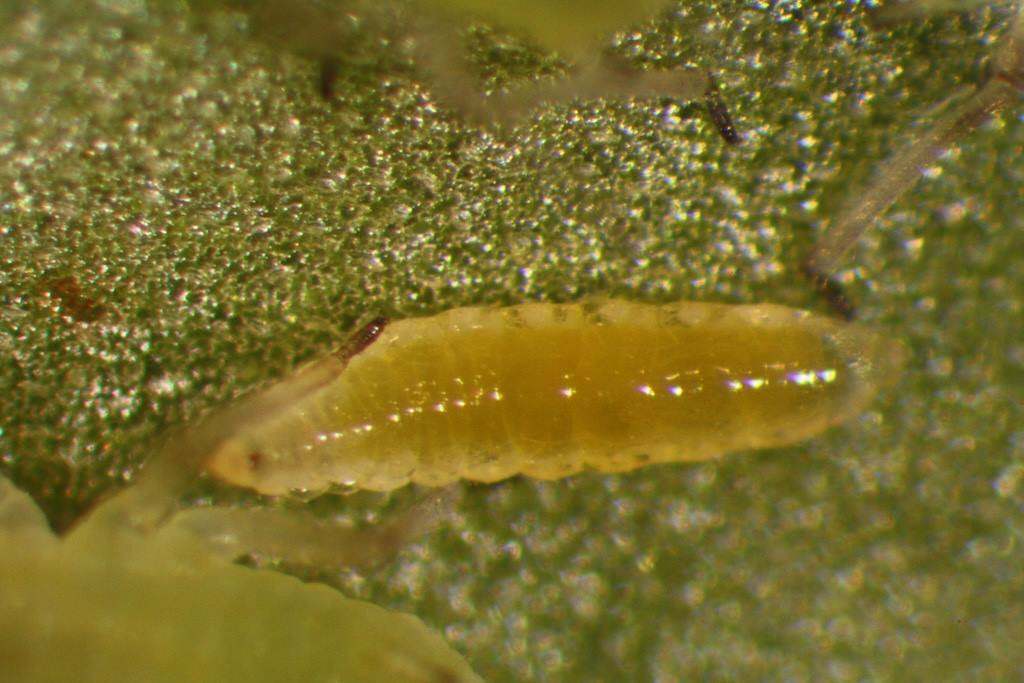
Aphid damage costs billions
“Aphids pose a massive threat to global crops, causing billions in damage annually through direct nutrient extraction and virus transmission,” warns Tom Pope, Professor of Applied Entomology at Harper Adams University.
Demonstrating aphids’ phenomenal ability to reproduce, Tom cited Dr Richard Harrington’s calculation that without natural limits, aphids could cover the Earth in a layer 149 kilometres deep in a single year.
However, the number of insecticides growers can use is shrinking. With fewer products available, the selection pressure from remaining conventional products is rising, further increasing the risk of resistance. This is why Tom says IPM is essential.
“Apthena is a really exciting new tool within the toolbox; it is an enabler and fits alongside other tactics that draw beneficial insects into crops.”
Tom is particularly excited about the launch of Apthena® because of its synergistic effects.
“For me, the future of crop protection is the intelligent selection of IPM tools, understanding interactions between them and harnessing synergistic effects.”
Enhancing biology
The active ingredient in Apthena® was first identified in the 1970s, but its application has been revolutionised by advanced encapsulation technology.
“While (E)-β-farnesene is the principal component of aphid alarm pheromone, it is volatile and degrades rapidly,” explains Rob Storer, Business Development Manager for BASF Biologicals. “What makes Apthena unique is its proprietary formulation. The active ingredient is encapsulated to control its release over an extended period of 20–30 days.”
The micro-capsules are formulated using natural and inert ingredients and are free of microplastics.
Field efficacy and implementation
BASF has demonstrated strong performance of Apthena® in trials. In standardised Y-tube choice tests, ladybirds exhibited a significant preference for vessels emitting air with Apthena®, opting to travel down the pheromone gradient far more frequently than controls.
Field assessments confirm its effectiveness on farm. In peas, Apthena® increased the number of plants containingbeneficial insects by 18%, and in sugar beet, the presence of aphids was significantly reduced from an average of 2% to 0.5%.
“Given it is rainfast within 24 hours, and requires no buffer zone or maximum application limit, it offers flexibility for growers,” adds Rob.
BASF recommends applying Apthena® at intervals of 14 days, using a rate of 0.3 – 0.5 L/Ha with water rates of 100–300 L/Ha. Although its aim is to keep pest populations below an economic threshold, where needed, it is compatible with other approved crop protection products.
“Ultimately, Apthena serves as a powerful tool designed for synergy,” adds Rob. “It is built to seamlessly integrate with existing IPM strategies, helping farmers effectively manage pests.”
Related news: