

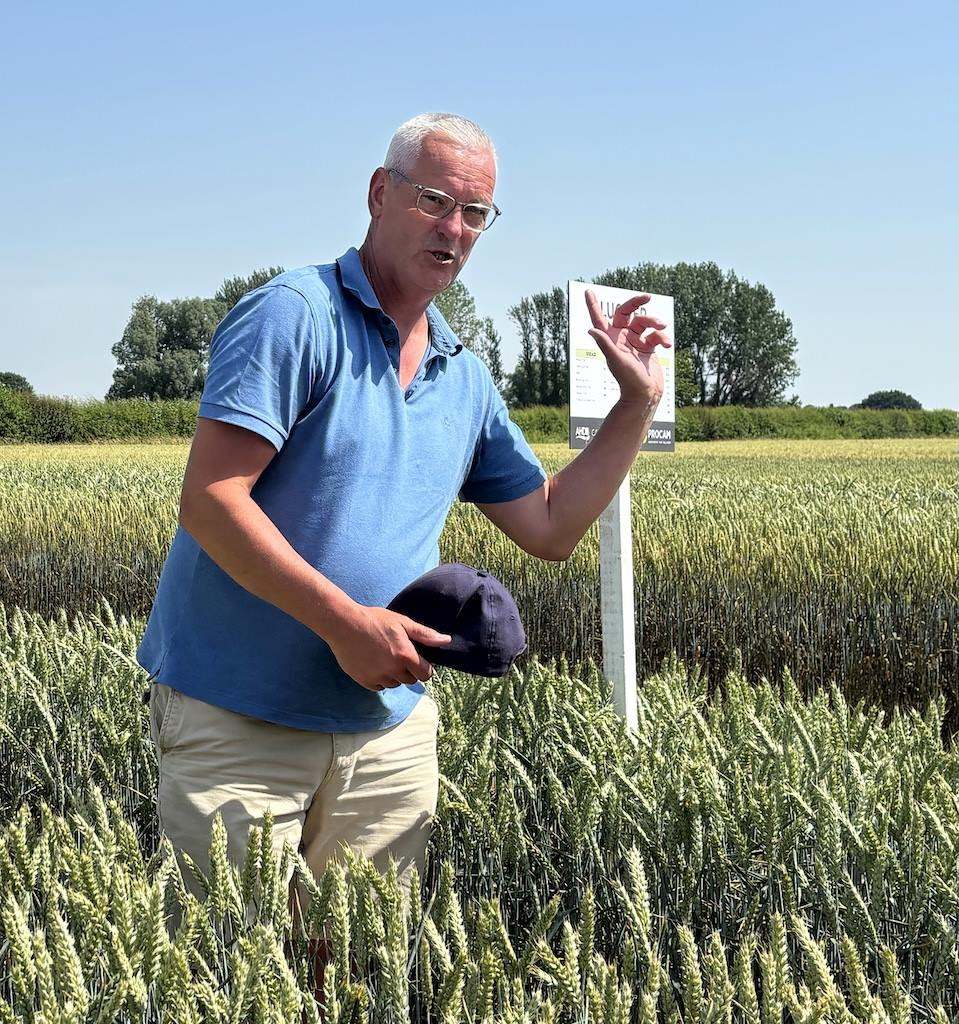
Winter wheat growers are being urged to review variety choices carefully ahead of autumn drilling after yellow and brown rust infections placed crops under significant pressure this season.
The warning comes from independent seed specialist Lee Bennett, who says rust has been one of the main sources of stress in winter wheat, particularly in eastern counties where dry spring conditions meant septoria was less dominant than usual.
Speaking at ProCam’s June open day at Cawood, near York, Mr Bennett said trial observations suggested some popular first and second wheat options had struggled to cope with the disease burden, despite their published resistance ratings.
“Rusts, particularly yellow rust, have had a profound impact on crop cleanliness this season,” he said. “Some of the more popular first and second wheat options have been unable to cope with the high disease burden, despite their supposed resistance ratings.”
While some growers reduced fungicide inputs this year because of low commodity prices and tighter margins following the poor 2025 harvest, Mr Bennett said the issue had also been seen where full fungicide programmes were applied.
“Even where a full programme of fungicides has been applied, some relatively recent and popular varieties have started to show their age, with yellow rust really putting their performance under the microscope,” he added.
ProCam has been testing a range of current and new wheat varieties under different fungicide regimes at sites across the UK. Mr Bennett said several leading varieties, including Group 3 wheat Bamford and Group 4 varieties Champion and LG Beowulf, had shown susceptibility to rust attacks in trials this season.
He said yield figures would become clearer once combines started cutting in July, but suggested the worst affected varieties could be down by as much as 0.5t/ha, and potentially more.
Mr Bennett said newer alternatives are available, but warned seed supplies of varieties such as KWS Solitaire, LG Challenger, LG Defiance, KWS Vibe and KWS Arnie are likely to sell quickly.
He urged growers, especially those committed to Group 3 wheats, to start planning variety choices early and to discuss options with their agronomist.
“With so many new and nearly new varieties to choose from, and a lot of marketing hype and Recommended List noise to filter, selecting the right option for a specific location, soil type or end market can be baffling,” he said. “My advice is simple: speak to your agronomist as soon as possible, take their advice onboard, and don’t leave it until the eleventh hour to place your order.”
Related news: