
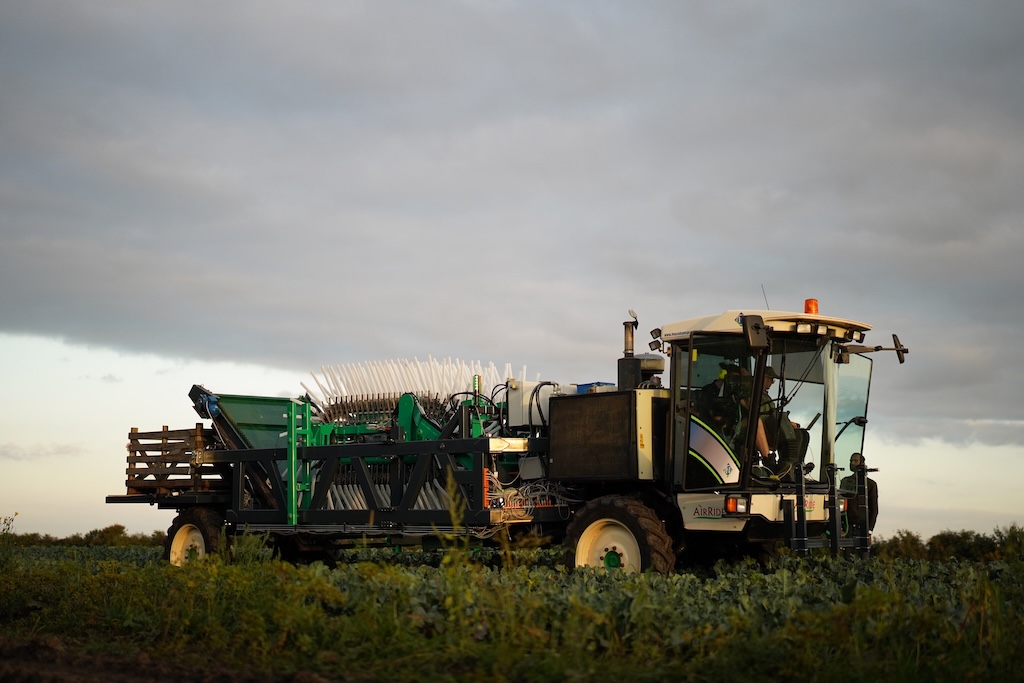
Upcycled Plant Power (UPP) has partnered with East of Scotland Growers (ESG) to deploy UPP’s automated selective harvesting technology across ESG farms and secure a reliable supply of broccoli biomass for ingredient production.
UPP is a pioneering UK food-tech company creating sustainable, hypoallergenic vegetarian protein products and fibre ingredients from previously wasted broccoli crops.
Under the agreement, ESG will operate UPP’s selective harvester to automate broccoli harvesting.
Harvested side-stream material will be supplied to UPP as a consistent feedstock, allowing both organisations to unlock value from biomass that would otherwise go to waste.
Mark Evans, CEO of UPP, sees the partnership as a win for farmers, consumers and the planet: “This partnership exemplifies a shared vision: empowering growers, reducing waste, and creating nutritious, planet-positive food solutions.
“By combining ESG’s agricultural scale and expertise with UPP’s proprietary processing and ingredient technology, we are turning materials with little to no commercial value into nutritious proteins and fibres for food makers and retailers.”
Benefits for growers
For farmers, the UPP solution:
- Reduces dependency on casual harvest labour, a major constraint on production
- Mitigates labour-cost inflation that directly affects competitiveness
- Helps reduce crop loss caused by labour shortages
- Lowers harvest costs, improving efficiencies for farms
- Creates an additional revenue stream, increasing yield strengthening farm financial resilience
Shared value
The partnership is structured so that ESG shares in the gross margin from UPP’s sale of upcycled ingredients, allowing growers to monetise side-streams without additional operational risk or capital investment.
For UPP, the agreement provides supply assurance: a reliable, high-volume source of broccoli biomass that is critical to scaling its ingredient lines.
The partnership also delivers a clear sustainable benefit; broccoli side-streams diverted from waste reduce Scope 3 greenhouse gas emissions in food supply chains, supporting UPP’s sustainability commitments and ESG’s regenerative agriculture goals.
Commercial outline
The value to UPP over the five-year term of the harvester deployment is expected to exceed £1m, assuming multi-unit deployments from year two.
The value to the farmer is the target saving of 30%+ of harvest costs and a material reduction in the need for casual labour.
Most of the value flows from unlocking the value in the side-stream which is expected to exceed £10m for each party by the end of the period.
Supporting planet-positive food systems
The collaboration reflects UPP’s planet-positive mission: turning low- or nil-value feedstocks into nutritious, low-impact food ingredients.
UPP’s technology and processing pathways support greater food-systems efficiency, reduce pressure on land and resources, and advance decarbonisation at scale.
UPP’s recent £3.5 million funding round, includes a £1.5 million follow-on investment from Elbow Beach, the climate-focused investment firm backing scalable tech.
The investment is now being realised with through the scaling of UPP’s dual revenue partnership model.
Together, UPP and ESG are demonstrating how automation, upcycling and grower partnerships can reshape harvest economics, reduce food waste, and deliver planet-positive protein at scale.
Andy Laing, Business Development Director at East of Scotland Growers, said: “We’re proud to partner with UPP to deliver tangible economic and environmental value back to Scottish growers and to the broader UK food system.
“This collaboration improves farm profitability while contributing to a food system that is more sustainable and resilient.
“We have been working with our supermarket partners to address Scope 3 emissions reduction, and working with UPP is helping us meet those goals.”
Andy Summerfield, Investor Director at Elbow Beach said: “UPP’s partnership with East of Scotland Growers is exactly the kind of solution we want to support; transforming under-utilised agricultural biomass into high-value, nutritious ingredients while delivering meaningful economic returns to farmers.
“By backing scalable solutions that reduce waste, lower emissions and strengthen supply-chain economics, we are helping accelerate the transition to a more sustainable and commercially robust food future.”
Related news: