
Maintaining a black-grass-free status with a series of measures to prevent incursion is a major focus for a Pembrokeshire arable enterprise.
During the first in a series of on-farm events at Dudwell, a newly-appointed AHDB Monitor Farm at Camrose, Pembrokeshire, visitors heard how the business was meticulous in its approach to averting potential sources of contamination.
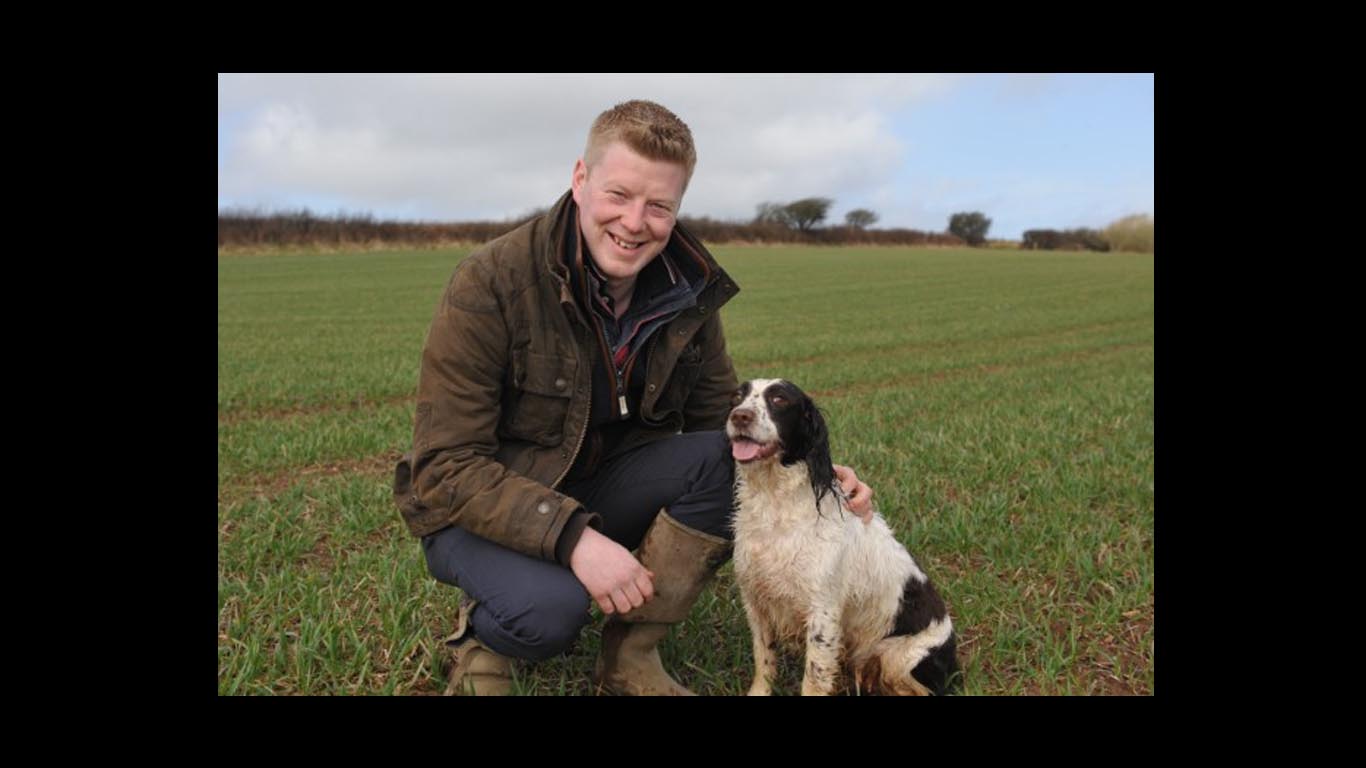
“We do everything in-house – we even bought a baler from an area that is black-grass-free,’’ said Tom Rees, who farms in partnership with his father, Charles. “All our seed is home saved and we don’t take any muck which includes straw.’’
The Rees family farms 280 ha, growing 65ha winter wheat, 32ha oats, 61ha spring barley and 24ha oilseed rape.
The arable land at Dudwell is split into five blocks of between 50 and 60 acres in a rotation of wheat, oilseed rape, wheat, spring barley and potatoes in the final rotation, grown in a land swap with another farmer.
There was a good turnout of farmers at the first AHDB event at Dudwell, including Julian Radcliffe, of Penmark, Wales’s previous AHDB Monitor Farm, near Barry.
The experience of being a Monitor Farm, said Mr Radcliffe, had helped him and others to improve their businesses.
“Benchmarking was the most valuable thing: it was not just about knowing our own costs but comparing them with others,’’ he said.
The Pembrokeshire and other Monitor Farm groups around the UK use AHDB’s Farmbench programme to benchmark their costs and understand their businesses better.
The high quality of speakers had also been beneficial. He added: “The main thing was the independent view. No-one was trying to sell us anything.’’
As a direct result of the Monitor Farm project, he had moved from cultivating all the land with a plough to introducing min-till to half of it.
The project had allowed others to scrutinise his business and Tom is encouraging this approach also.
Tom said it would not only flag up possible improvements he could make to his system but also help farmers to learn from aspects of the business that are performing well.
“After benchmarking as part of the last Wales Monitor Farm project, I’ve now got a very firm grasp of costs and because of this I am more confident in forward selling a proportion of our grain to lock into a margin,’’ he said.
The new AHDB Monitor Farm has a steering group and arable grower Nick Evans is a member. He grows 320ha of arable crops at Cruglas, Solva, and is delighted to have a Monitor Farm in Pembrokeshire.
“Having a farm on our doorstep with a similar farming practice is excellent. We are all seeking to reduce our costs and improve output and some of what we learn through the Monitor Farm project will I am sure help us to achieve those.’’
Jason Llewellin, who is also a member of the steering group, said arable production in Pembrokeshire was mostly within mixed farming enterprises which made it difficult for growers to attend events in distant locations.
“It will be easier for farmers to attend events closer to home and we can all learn from each other,’’ said Mr Llewellin, who grows 300ha of crops at Trewarren Farm, St Ishmaels.
Winter Monitor Farm meetings will be held at Camrose Community Centre, Camrose, all starting at 1pm, from 7 November 2018. Other dates are 5 December 2018, 9 January 2019 and 6 February 2019.
www.cereals.ahdb.org.uk/pembrokeshire
Caption:
Tom Rees with dog Pip