
A new digital resource aims to encourage growers to look beyond soil phosphorus indices when assessing why crops may be failing to capture sufficient phosphorus.
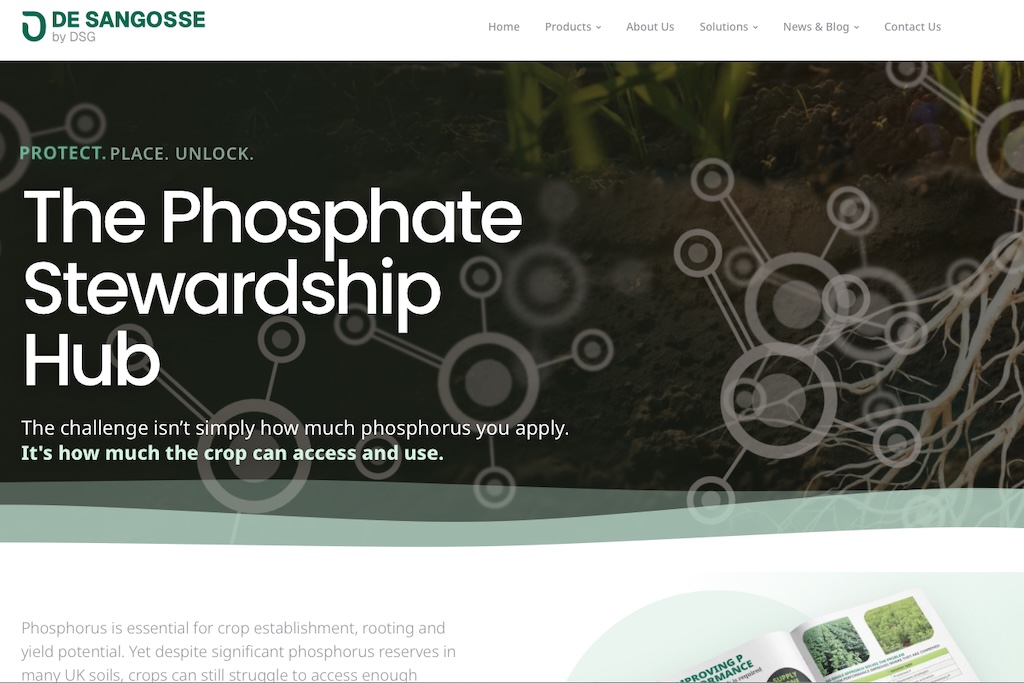
Developed by De Sangosse with support from ADAS, the Phosphate Stewardship Hub takes growers through a five-stage process covering crop offtake, phosphorus availability, soil reserves, root access and field observations.
The starting point is the harvested crop. Yield and grain analysis can provide an indication of how much phosphorus the crop actually captured and removed from the field.
Dr Christina Baxter, senior research scientist at ADAS, describes the harvested crop as a useful measure of what happened during the growing season.
Grain phosphorus concentration, combined with yield data, can be used to calculate actual phosphorus offtake and provide a better indication of how effectively the crop has captured the nutrient.
Data from the ADAS Yield Enhancement Network has shown considerable variation in grain phosphorus concentration and crop phosphorus offtake, including between crops grown at similar soil phosphorus indices.
This suggests that soil P status alone does not necessarily explain the amount of phosphorus available to a growing crop.
Looking below the soil test
The hub therefore encourages growers to consider a wider range of factors when investigating phosphorus limitations.
Soil analysis is combined with grain analysis, root assessment, crop establishment and field observations to build a picture of what may be restricting phosphorus uptake.
Root development is particularly relevant because phosphorus is relatively immobile in soil. Having sufficient phosphorus present does not necessarily mean that it is readily accessible to developing roots.
The approach divides potential management responses into three areas: Protect, Place and Unlock.
Protect is concerned with maintaining the availability of applied phosphate. Place considers how fertiliser positioning can improve access by developing roots. Unlock focuses on making better use of phosphorus already present within the soil.
The intention is to move the decision-making process away from simply asking how much phosphorus should be applied and towards identifying what is actually limiting crop uptake.
From diagnosis to management
The hub is supported by a series of short Phosphate Clinic videos featuring Dr Baxter and De Sangosse commercial technical manager Rob Suckling.
The videos cover issues including what harvest can reveal about phosphorus uptake, why crops may struggle to access available phosphorus and how growers can investigate potential limitations.
For soil management, the approach is relevant beyond fertiliser efficiency. Improving crop phosphorus capture can potentially increase the return from existing soil reserves and fertiliser inputs while reducing the risk of surplus phosphorus being lost to water.
The Phosphate Stewardship Hub, supporting video series and an ADAS-backed stewardship guide are now available online.
Related news: