

• Hutchinsons technical manager Dick Neale gives his advice on how to best manage
desiccation of cover crops on wet soils.
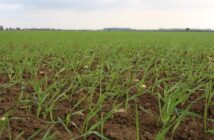
Excessively wet soils this year are more likely to be dried by the presence of covers than
kept wetter. However, sun and wind must be allowed to reach the soil surface for adequate
drying predrilling.
“Whilst many cover crops may have already been dessicated either by glyphosate or grazing,
in some situations of late establishment limited growth has been allowed to continue and
spray off opportunities have been limited, “ he says.
“SFI rules for overwinter covers also means that termination is not realistically possible until
mid-January and spraying opportunities and field access has been very limited this year.”
His advice is that some thinner covers may in fact be better left until nearer drilling for
desiccation, although this depends very much on species within covers, soil type and
following crop and its likely drilling date.
“It’s worth remembering black grass re growth on bare soil can also be considered under
the same rule set as covers with regards to dessciation.”
Options
Grazing with sheep is increasingly being used, and Hutchinsons Maxi Graze mix is ideal
where this is planned, says Mr Neale. There are several considerations to take into account.
“It is important the grazier understands that many covers are being grown for soil
conditioning and not exclusively sheep grazing. Therefore, the stock will graze the top
growth very rapidly and will need moving on before soil surface damage occurs.
“For this reason, roughly twice the cover grazing area is required compared to a traditional
stubble turnip crop where the sheep are left on to clear all the tubers (the tubers are what
puts condition on the sheep whereas the top growth provides a maintenance feed).”
Glyphosate
It is important adequate rates must be used (1000g minimum) with an adjuvant like Spryte
Aqua CF, he says.
“Low temperatures and shading will impact performance and legume species like crimson
clover, berseem clover and vetch will often survive treatment. This is rarely a problem if
herbicide in the following crop is effective or the following crop is tall like beans or maize or
more smothering like peas.
“Kyleo is usually used in mixture with additional glyphosate around 3 l/ha and should be
used where surviving brassica or phacelia will impact the following crop. This approach
requires expensive post emergence herbicide treatment, if any exists.
Cultivation
Cultivation to kill and better facilitate drilling always remains an option in controlling cover
crops, says Mr Neale.
“However If a drill will not cope with the situation, then it is better to cultivate as required,
rather than risk failure of a crop – you only get one chance at establishing a spring crop!
“Only do what’s required. Remember the benefit of the cover is largely underground so for
example if ploughing, plough as shallowly as possible or work the top just enough to
facilitate accurate sowing.
Remember, the covers are rooted, and drills will often cope well as the residue does not
‘drag’. It is often worth an early run up and down with an empty drill to see if it copes.
Related news: