

There is no evidence that alternating SDHI chemistry within a wheat fungicide programme offers an effective anti-resistance strategy for Septoria, according to two of the UK’s leading cereal disease experts.
Mixing the SDHI with a strong triazole remains the best method to maintain the efficacy of this group of fungicides, say the experts.
BASF staff have been fielding questions from agronomists and growers who have used Xemium (e.g. as in Adexar, Librax) at T1 and who are keen to use what is widely regarded as the strongest anti-Septoria SDHI again at T2, given the likely high disease pressure this season.
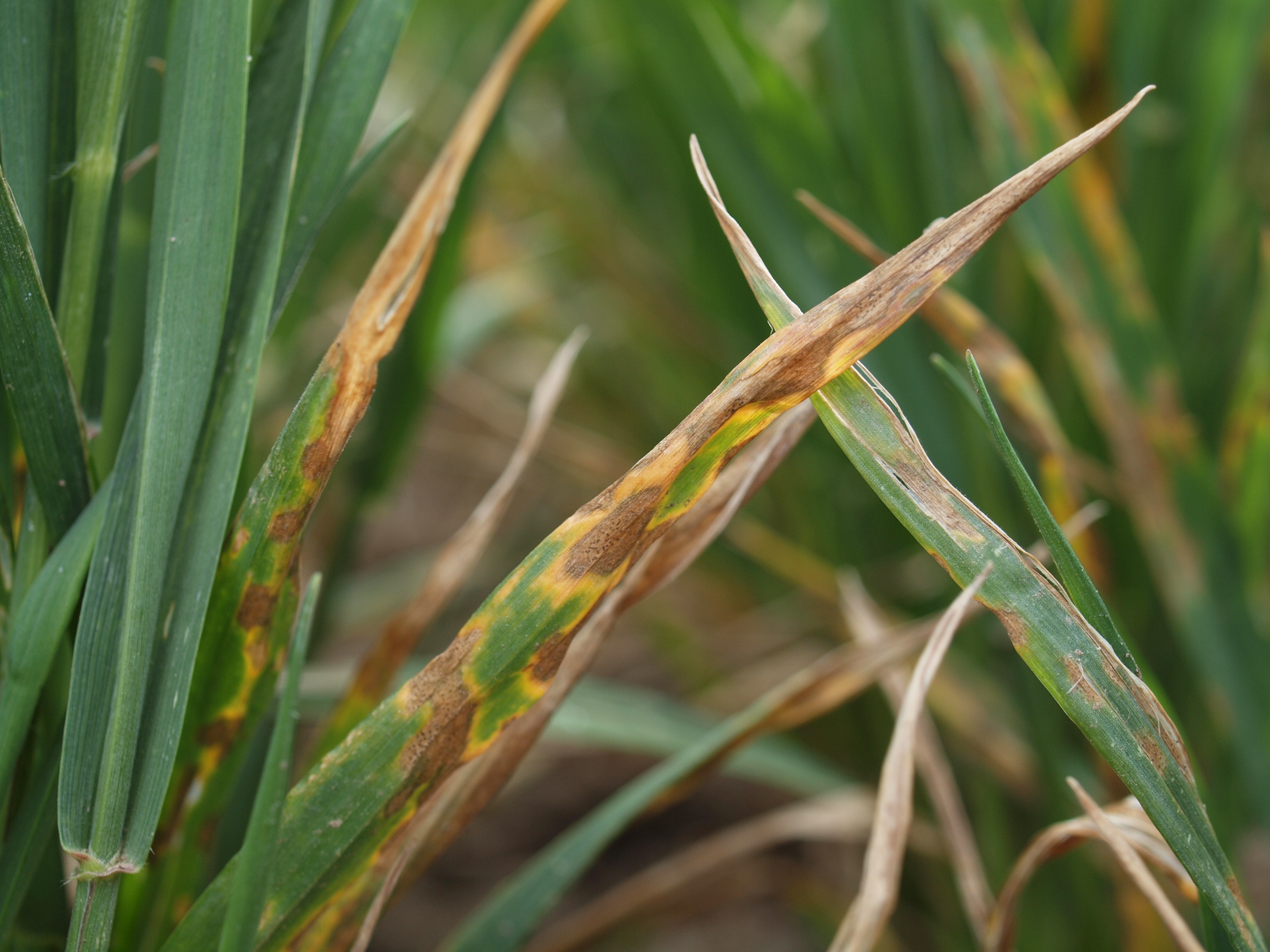
The concern is that sequential use of the same SDHI could encourage the development of resistant Septoria isolates, a worry ramped up by reports last year of such isolates being discovered in Ireland and the UK, following on from earlier findings in Europe.
However, these fears are unfounded. SDHIs are effectively cross-resistant – in practice they all exert a very similar selection pressure on a Septoria population, according to Prof Fiona Burnett, head of crop and soil systems, SRUC.
“There is no evidence that alternating SDHIs in a fungicide programme will slow the onset of resistance,” she says. “The best form of stewardship is to use an SDHI in partnership with an alternative mode of action with comparable efficacy, such as a strong azole, backed up with a multi-site fungicide.”
Due to the well-documented decline in efficacy among azoles, there is a danger that growers will underestimate what they contribute to programmes, given the apparent strength of the SDHI and multisite mix alone, Prof Burnett warns.
“Some people appear willing to play fast and loose with the azole component. However, azoles provide a sound footing for any programme – they add to the efficacy of the mix against Septoria and improve the spectrum of disease control, particularly against rusts.”
As with the SDHI, there is no evidence that alternating the best Septoria azoles, epoxiconazole and prothioconazole, is worthwhile, as they both exert the same selection pressure and appear to select for the same mutations, she notes.
“There may be a subtle benefit, but it is much more important to use the azole at a sensible dose and apply it at the right growth stage.”
Bill Clark, technical director at NIAB TAG, agrees there appears to be no practical benefit from alternating SDHIs.
Although many different Septoria resistance mutations to SDHIs have been discovered, they are all single mutations and have not led to any observable loss of field efficacy, he explains.
However, growers must do all they can to protect these compounds, he agrees. “Azoles were traditionally used as eradicants, but we are now relying heavily on SDHIs to get us out of trouble.”
Growers must include the right azole at the right rate in conjunction with SDHIs, says Mr Clark. Using a co-formulation that has been specifically designed to get the best from both actives, such as Adexar (Xemium + epoxiconazole) and Librax (Xemium + metconazole), whose formulation raises the activity of metconazole to levels higher than might be expected, remains the best approach, he maintains.
When using straight SDHI products such as Imtrex or those partnered with strobilurin chemistry, a strong azole, such as epoxiconazole or prothioconazole, must be added, he stresses.
He shares concerns about omitting the azole and partnering the SDHI with a multi-site only. Only the SDHI is taken up by the plant so it is left dangerously exposed once in the leaf. “You need a systemic partner or the SDHI is essentially left on its own,” says Mr Clark.
With this in mind, Adexar and Librax are the perfect options for the all-important T2 spray, says Ben Freer, business development manager at BASF.
“The warm temperatures we are now experiencing will result in a rapid explosion of disease. The flag leaf spray is no time to be complacent, even if you have applied the T1 in ideal conditions.”
Going into T2, with high Septoria pressure in the field, a robust dose of Adexar or Librax with CTL is the best approach, and even if the T1 has only just recently been applied, the T2 spray should still be applied when the flag leaf (leaf 1) is three-quarters to fully emerged on the main stem, says Mr Freer.
He recommends Adexar or Librax at 1.25-1.5 l/ha with Bravo at 1.0 l/ha. “Priority should be given to the crops that received their T1 first to minimise the gap between the two main sprays.”
Whatever the weather pattern, the T2 spray timing pays the largest dividend and independent trials have proven time and time again that Adexar and Librax treated crops deliver the highest yields,” says Mr Freer.
“In 70 comparisons by ADAS, SRUC and NIAB TAG in 2014 and 2015, Adexar and Librax treated crops have delivered an average yield benefit over Aviator of 0.2 t/ha, £20/ha. Across 200 hectares of wheat, that’s more than an extra lorry load (1.3 lorries!) of grain off the combine, and certainly worth having!.”
OLYMPUS DIGITAL CAMERA