
Reducing UK agriculture’s dependence on manufactured nitrogen fertiliser needs to be treated as a long-term resilience strategy rather than a simple reduction in fertiliser use, according to a new report from the Sustainable Nitrogen Alliance.
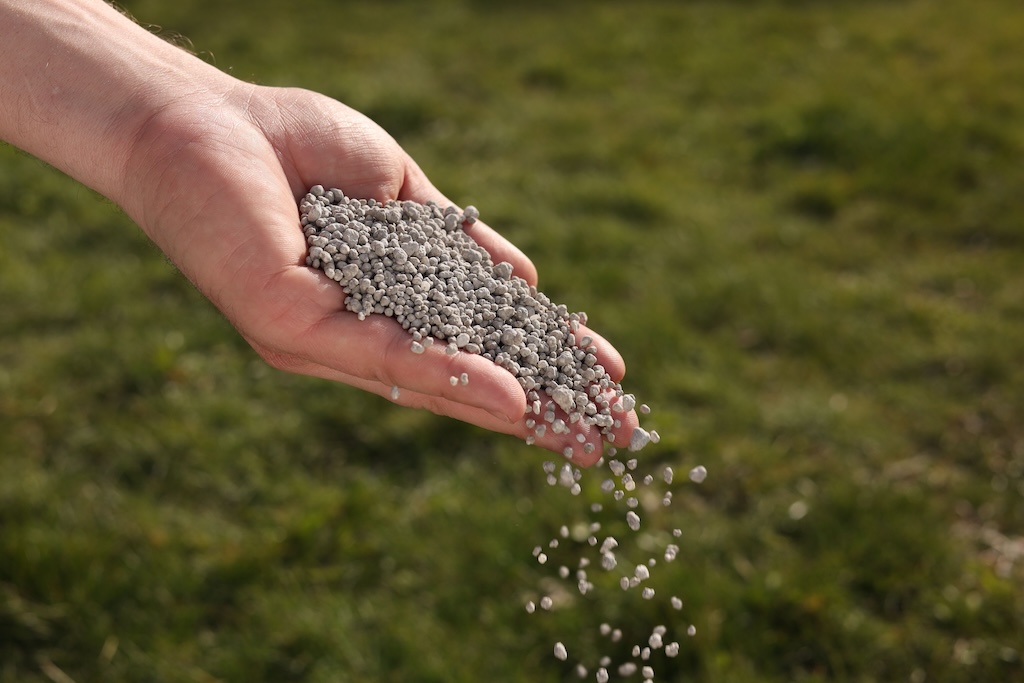
The report, Building Resilience in UK Food Production, argues that the UK’s reliance on largely imported synthetic nitrogen leaves farming exposed to international energy and fertiliser markets, while excessive nitrogen use contributes to water pollution, biodiversity loss and greenhouse gas emissions.
The alliance is calling for government to develop a funded strategy to reduce that dependency while ensuring that farm productivity is protected during the transition.
Nitrogen remains fundamental to crop production, making the practical challenge considerably more complicated than simply reducing application rates.
The report points instead towards farming systems that can make greater use of biological nitrogen fixation and recycle nutrients more effectively. These include greater use of legumes, pulses and clovers, alongside mixed farming and systems that integrate livestock and arable production.
Building nitrogen resilience
The case for a more diverse approach is illustrated by Shimpling Park Farm in Suffolk, where farmer John Pawsey has operated an organic livestock and arable system for 25 years.
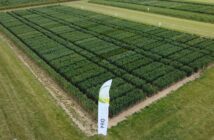
The farm is trialling nitrogen-fixing crops including chickpeas and lentils, alongside intercropping and a wider range of crops.
The underlying principle is that a more diverse rotation can reduce reliance on a single external input while potentially improving soil condition and the ability of the farming system to cope with changing conditions.
For conventional arable systems, however, reducing manufactured nitrogen presents a more immediate technical challenge. Nitrogen supply has to match crop demand closely enough to protect yield and quality, while avoiding applications that are inefficient or subsequently lost from the soil–plant system.
That makes nutrient planning, soil management, crop rotations and nitrogen-use efficiency increasingly important.
The report cites research indicating potential profitability benefits from nature-friendly approaches, although the transition can involve an initial income reduction and requires appropriate support.
A managed transition
The Sustainable Nitrogen Alliance is calling for government to support practices that reduce dependence on synthetic nitrogen, including mixed farming and nitrogen-fixing crops.
It also wants annual tracking of nitrogen use to provide a clearer picture of where the nutrient is being applied and what happens to it subsequently.
For growers, the more immediate question is likely to be how such a transition can be achieved without compromising output.
Rather than eliminating manufactured nitrogen, the longer-term opportunity may lie in reducing unnecessary dependence on it through better matching of nutrient supply to crop demand, greater use of biological nitrogen fixation and improved nutrient cycling.
The report warns against an abrupt reduction in synthetic fertiliser use, citing the experience of Sri Lanka following its 2021 restrictions, and argues that farmers need practical support if changes to production systems are to maintain food output as well as environmental performance.
Related news: