
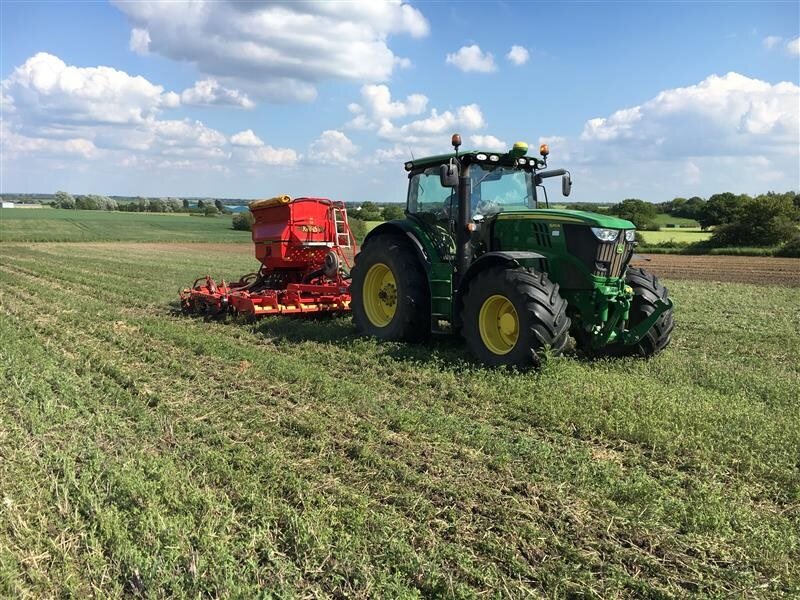
A new integration between Omnia digital farming software from Hutchinsons and John
Deere Operations Center promises to deliver benefits to farmers through seamless data
transfer across the two systems.
The upgrades are the latest in ongoing developments to Omnia, which will deliver further
efficiency gains for users of both systems, through improved workflows, reduced
management time, and automated, accurate record keeping.
Hutchinsons Head of Digital Agronomy, Lewis McKerrow, says that while the data exchange
between the two systems is now more streamlined, with some fully automated options,
users still retain the flexibility to choose how data is used and shared.
“The transfer of data from Omnia into Operations Center, and back the other way, is now
much easier and more closely integrated, yet users of either platform remain fully in control
of what they do.”
Mr McKerrow highlights four main aspects to the latest upgrade, as outlined below:
1. Sharing tasks/ work plans
Digital ‘Tasks’ created in Omnia can now be sent directly to Operations Center as ‘Work
Plans’, with no duplication of data entry on either side. As well as details of specific tasks,
users can allocate them to individual machines and staff all within Omnia, with further
opportunity to review and amend, if required, once in the John Deere system.
“Once the task has been confirmed and the work plan received, that operator has all the
information they need to complete the job,” notes Mr McKerrow.
Work Plans/ Tasks can include anything from a simple cultivation task, through to spray
plans including tank mix details, or variable rate plans for fertiliser and other inputs.
2. Recording field data
Once tasks have been completed in the field, data can now be automatically sent from the
machine directly back into Omnia (via Operations Center) within one hour to create an ‘as
applied’ operation record.
Users have the option to sync all completed work plans and operations back into Omnia, or
manually select which to save. For Omnia subscribers, this information automatically adjusts
stock records and updates field costings.
3. Automated yield import
From summer 2026, an upgrade will be made to automate the import of yield data; this will
streamline the data transfer from John Deere combines and forage harvesters to ensure
data can be available for users to utilise at peak times.
4. HarvestLab integration
The final development, is the integration with John Deere’s HarvestLab, allowing a host of
additional information to be imported directly from the machine with yield data. HarvestLab
currently measures a range of constituents in different crops, such as crude protein, dry
matter, sugar and starch content in forage crops, and protein in combinable crops.
John Deere says the integration reflects the growing demand for simpler digital workflows.
Dennis Schrijver, John Deere Precision Tech Specialist, says: “Farmers want their technology
to work quietly in the background, without creating extra admin. This integration with
Omnia helps remove duplication, reduces the risk of errors, and gives users faster access to
accurate field data.
“When information flows easily from the office to the machine and back again, it supports
better planning, stronger compliance and more confident decision-making. That is exactly
what we are aiming to deliver through John Deere Operations Center.”
Making a genuine difference
Scottish Borders farmer Graham Innes, Director of A P Innes, says the new work plan
functionality between Omnia and John Deere Operations Center has made a “real
difference” to managing records on his farm.
“The accuracy of our spraying, seeding and fertiliser applications has improved significantly,
simply because the information is captured directly as the work is being done. It takes a lot
of the manual input out of the process, which helps reduce the chance of small mistakes
creeping in when things are busy, and makes life easier for everyone involved.
“We’re also making much better use of technology that’s already built into the machines,
which means operators can stay focused on the job itself — keeping everything running
efficiently, working to the right level of detail, and planning the day’s logistics.
“At the same time, it has helped the office side of the business run more smoothly too, with
clearer, more reliable records available straight away.”
Related news: