
Farming interest in soil science has exploded in recent years. Sorting through so much new information can be a challenge and deep compaction is no exception. What are the facts and how can we put them into practice on farm?
Joeseph Martlew a researcher at Cranfield University says: Compaction occurs when a weight is applied to a soil that the soil structure cannot support. Soil compaction occurs naturally as the weight of soil above compresses the soil below. Soils also settle over time after cultivation. Soils with very fine texture (predominantly clays) may naturally be compact (often because of glacial deposition) and therefore will be less likely to suffer further compaction when the soil is dry.
On all soil types, any compaction beyond the natural state alters the soils physical characteristics and changes how the soil functions. These changes can be beneficial, in that compaction can form a stable platform to spread load. However, these changes can also be detrimental causing a reduction crop quality and yield, and off farm impacts such as increased risk of flooding and pollution.
What is meant by deep compaction?
Deep soil compaction occurs below the depth annually cultivated, in a zone known as the subsoil. The depth at which this zone begins varies with land management practices and geology. In healthy soils, crop roots are found throughout the subsoil and the subsoil is an important reservoir for the crop during low rainfall periods.
Deep compaction is caused by driving over the land when the subsoil is wet, even though the topsoil conditions may look dry. Heavier wheel loads on farm have increased the risk and severity of deep compaction. As a rule of thumb, European researchers proposed that the depth of problematic wheel load pressure (50 kPa) on a soil near field capacity increases by 8 cm for every tonne of additional wheel load and by 8 cm every time tyre inflation pressure doubles1. In reality, it is difficult to generalise the depth to which a wheel load will travel through the soil profile due to the number of factors that influence this. Accurate risk assessment of deep compaction should be carried out using machinery and soil conditions specific to a farm.
Estimates predict that up to a third of EU farmed subsoils may already be detrimentally affected by deep compaction. On the majority of soils, deep compaction becomes a problem when it negatively affects soil functions such as drainage, reduces crop growth through restricting root movement, and affects the wider environment through increased runoff and nutrient loss.
Deep compaction can limit the ability of the plant to forage for water and nutrients in the subsoil, limiting yield especially during drought. Yield reductions of between 5 – 15% have been recorded but the impact on yield is sporadic. During wet periods, deep compaction reduces percolation and restricts storage of water to above the compacted layer, increasing the risk of waterlogging, soil erosion, flooding (on and off farm) and greenhouse gas emissions.
Natural shrink/swell and freeze/thaw cycles have been shown to improve soil conditions in compacted topsoils. However, these processes have not been shown to improve deep compaction. Therefore, unless alleviated, deep compaction tends to accumulate seasonally and persist.
Identifying deep compaction
Soil sampling and in-field methods can be used to measure deep compaction but results require interpretation. For example, penetration resistance may show a compacted layer in the subsoil but if that layer is not impeding water infiltration, gas exchange and root growth, it may be providing a benefit by spreading wheel load and protecting deeper soil. On farm, carrying out a simple visual soil assessment using free tools such as the SubVESS method (Box 1.) is the easiest way to identify whether you have problematic deep compaction.
Box 1. SubVESS is a visual, three-step method that uses a flowchart to identify deep compaction. Beginning at the depth of one spade, soil profile layers are identified and scored using reference images and descriptions in the freely available flowchart to characterise the subsoil and decide whether any action is needed (available from https://www.sruc.ac.uk/info/120625/visual_evaluation_of_soil_structure/1767/subvess_subsoil_visual_evaluation_of_soil_structure_%E2%80%93_method_description).
Alleviating deep compaction
Avoiding causing deep compaction in the first place is the most effective approach and adoption of controlled traffic farming further reduces the proportion of the subsoil at risk. Irrespective of whether deep compaction is natural or artificially induced, alleviation can benefit a crop by increasing access to water and nutrients. Where a problem has been identified, successful subsoiling requires soil moisture conditions to be right to avoid smearing, using the appropriate combination of leg spacing and wing type, angle and depth. Provided these conditions are met, vertical fissuring of deep compaction can be achieved across the working width without too much disturbance. Afterwards, the soil structure is weak and at a high risk of recompaction. Although over time it will regain some structural strength, field traffic should be avoided as much as possible. Subsoiling provides a reliable economic return only when targeted at an identified problem.
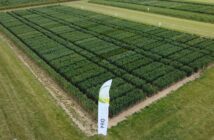
Deep-rooted or perennial cover crops have been suggested as an alternative solution to overcome drawbacks of conventional subsoiling. The roots of some species are able to use and some even create pore space that they explore and then expand, improving soil functions and providing channels through deep compaction that following crops can utilise. Unlike conventional subsoiling, plant roots avoid excessive disturbance and form stable soil structure that is no more at risk of compaction than undisturbed soil. Cover crops may also provide additional benefits improving biodiversity, nutrient cycling and increasing resilience to compaction. The traits that govern cover crop root properties can be selected through breeding. However, evidence of their ability to prevent and alleviate deep compaction is currently limited and is the focus of ongoing research.
Knowledge gaps
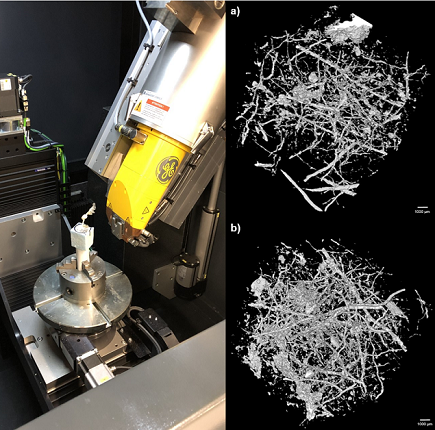
Using cover crops to alleviate deep compaction is an exciting concept. To ensure success a better understanding of how different cover crops respond across a broader spectrum of crop rotations, climates and soil types is needed in order to provide appropriate guidance on species selection, residence times, management advice and expectations. New techniques such as X-Ray CT and digital root scanning are changing our understanding of crop root response to deep compaction and the types of cover crop root systems that may be best suited to alleviating deep compaction.
The national impact of deep compaction is difficult to know simply because it has not been measured over a sufficient variety of soils and management systems. Research evidence suggests deep compaction is a widespread issue in farming and may contribute to yield losses and worsen the environmental impact of farming. Improvements in techniques such as EMI and GPR combined with efforts to standardise, collate and compare data around the world will allow us to make better decisions in the future.
Although addressing deep compaction may not always make obvious economic sense in the short-term, farming land productively and sustainably in the long-term requires us to consider compaction over the whole soil profile. With increasing pressure on production and environmental issues in agriculture, small efforts now may pay large dividends in the future.
Research
1Schonning, P., Lamande, M., Keller, T., Pedersen, J., Stettler, M. 2012. Rules of thumb for minimising subsoil compaction. Soil Use and Management, 28(3), pp. 378 – 393.