
Why is straight nitrogen alone not enough? Mark Tucker, Agronomy Manager at Yara, during a recent webinar on the topic, said that many farmers asked how they can avoid being stuck with a shed full of straight nitrogen when salespeople come calling. The key, as he outlines, is to have a plan in advance. During the webinar both Mark and Natalie Wood, Country Arable Agronomist, explained the different aspects worth considering before making your purchase.
Firstly, we need to manage sulphur effectively. “We can no longer rely on sulphur deposition in the atmosphere,” said Natalie. “Since the 1970s, there’s been a sharp decline due to industry clean-up. Most of the UK receives less than 10kg per ha of SO3. Crops require between 40 and 75kg per ha, so there’s a shortfall that needs to come from fertilisers.”
Sulphur is needed within the plant for effective development, including for regulatory, catalytic, and enzymatic processes. However, as Natalie points out, we also need sulphur to gain the full benefits of nitrogen applications. “Sulphur is important for nitrogen uptake and metabolism,” says Natalie. “Without it, you can’t utilise nitrogen effectively. We then see deficiency symptoms that include a pale yellow colour on the leaf. This is often confused with nitrogen deficiency and so overlooked. Unlike with nitrogen, sulphur deficiency results in the yellowing appearing on younger leaves at first.”
Sulphur and nitrogen have a close relationship, each requiring the other to fully function. Some sulphur should be applied along with each application of nitrogen. In long-term trials, sulphur applications show an improved average yield of 0.3-0.5 tonnes per hectare, but responses of up to 1.4t/ha have been seen.
P and K also make a significant difference to yields and should be integrated into all serious crop management programmes. Traditionally, an application of these in autumn/winter has been the dominant approach, but a more crop-focused spring application will have a much greater impact
“The greatest crop demand is in the spring, as the crops start to grow away,” says Mark. “This is the time when growth starts to happen but is also when soil availability is at its lowest. This is when soils are cold and show limited biological activity. P coming through is going to be either slow or non-existent, and rainfall will result in K having moved down the soil.”
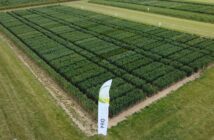
A spring application helps circumvent these problems, topping up with P and K at the time when they’re least available. “We’ve performed many trials over the decades,” says Mark. “The yield benefits from a spring application are clear and consistent.”
Mark also made a call to incorporate minimising ammonia emissions as a key part of all nutrient management programmes. “88% of ammonia emissions come from agriculture with 23% of that number coming from fertiliser products,” says Mark. “We need to take that into account when making our choices. Urea would emit the highest levels of ammonia therefore the easiest way to reduce your emissions would be to switch to AN.”
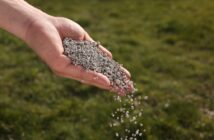
The discussion then turned to product characteristics – which is best for your farm, prills or granules? “There’s a useful analogy,” says Natalie. “We can compare a prill to a ping pong ball and a granule to golf ball – it’s heavier and denser. It goes further when thrown and is less affected by external factors like wind.” The question then becomes how far you need the spread to be. When spreading over 30 metres, a lot of force will be on the fertiliser particles, causing differing results in terms of their strength. It’s best to investigate and choose an option that works for your individual farm, and not assume one option is better than another.
By integrating all of the above into a single programme, we can see a much more effective strategy that promotes more robust yields. “In terms of what you need, stop and think,” says Mark. “You might only need 35% of straight N in your shed. Don’t end up with a load of product that ultimately won’t deliver at harvest.”
Image
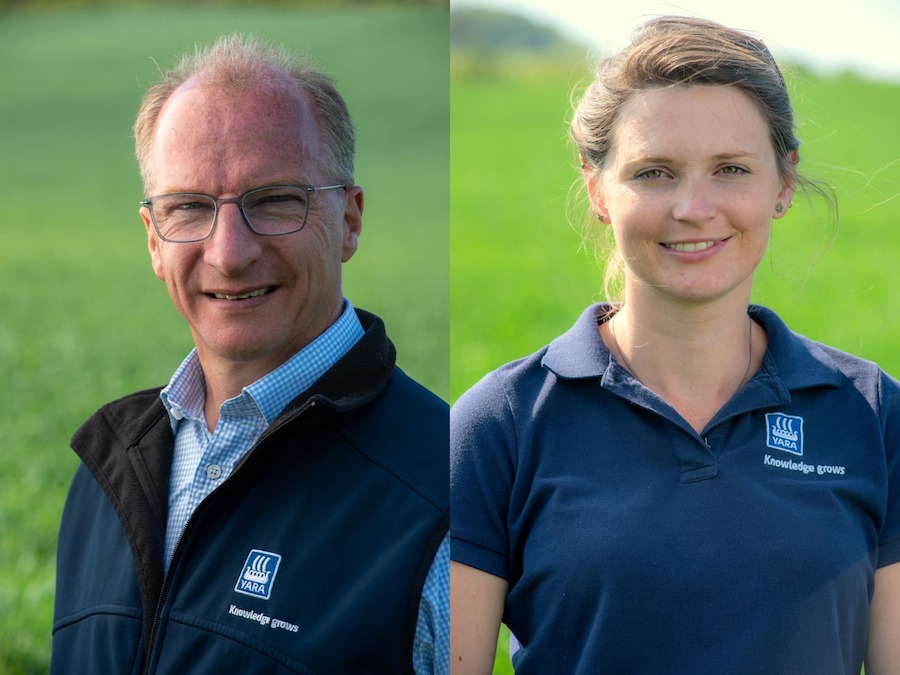
The webinar presenters were Yara’s Mark Tucker (Agronomy Manager) and Natalie Wood (Country Arable Agronomist).