
Following numerous reports of caterpillar activity in maize crops across the country over recent
weeks, Hutchinsons is advising growers to remain vigilant and make sure they identify species
correctly.
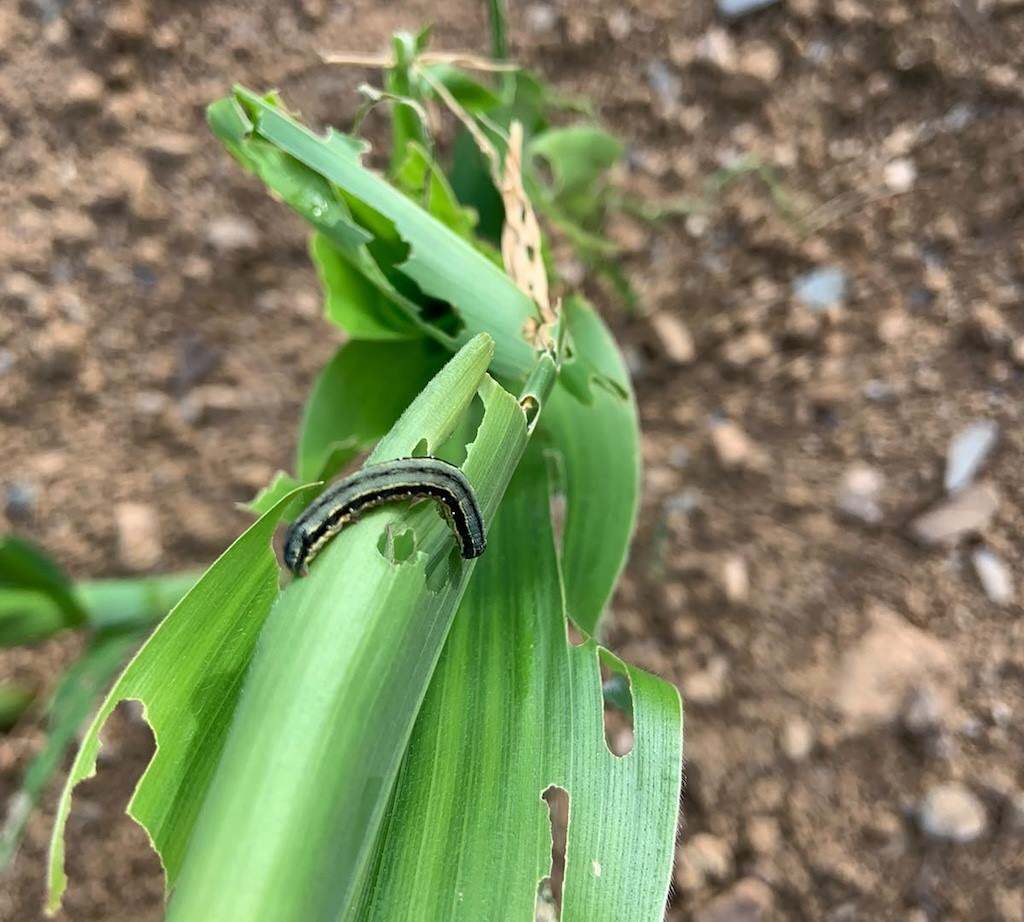
In most cases, the predominant species being found are Silver-Y and Beet Armyworm, says
agronomist & technical support adviser, Amie Hunter. “However, with the concerns over European
Corn Borer, and the notifiable pest of Fall Armyworm, correct identification is important.”
These caterpillar species can sometimes look very similar, and colour alone cannot be relied upon as
an indicator of species, so she urges growers to refer to the latest identification criteria issued by the
Maize Growers Association (MGA) to help make accurate decisions.
“The key is to check the leg configuration, particularly the fleshy prolegs towards the rear. Silver-Y is
a looper moth and has a different leg configuration to most caterpillars, with three pairs of front
true legs, and only two pairs of abdominal prolegs, plus an anal pair.”
In contrast, other caterpillars, such as European Corn Borer, Fall Armyworm, Beet Armyworm or
Cutworm, have four pairs of abdominal prolegs, as well as three pairs of front true legs and an anal
pair.
As a notifiable pest, any suspected sightings of Fall Armyworm should be reported immediately to
the relevant plant health authority; go to the UK Plant Health Portal
(https://planthealthportal.defra.gov.uk/) to find out how.
“Whether to treat or not, and what with, depends largely on which species are present and the level
of infestation,” notes Ms Hunter. “We only have cypermethrin and chlorantraniliprole approved for
use in maize.”
Cutworm warning
Another issue to be aware of given the exceptionally hot and dry conditions seen through much of
the spring and summer so far, is cutworm, notes Hutchinsons colleague, Duncan Connabeer.
Cutworms thrive in warm, dry conditions, especially on light, sandy soils, with larvae feeding on
underground roots or tubers in search of moisture. At night, they can also emerge from the ground
to chew through plant stems at ground level.
“Cutworms are the larvae of the Turnip moth, and can affect a wide range of crops, notably
unirrigated potatoes, brassicas, beet, and even maize,” says Mr Connabeer.
“Symptoms in maize are often characterised by the plant base being chewed off like a saw, leading
to the felling of plants up to 4–5 feet high. The damage in maize is mainly being done by the more
mature subterranean larval instars [a developmental stage of the insect], which are immune to rain
and come up and feed at night. As such, there is nothing effective we can use to control them.”
However, substantial rainfall (defined as 10 mm or more of moderate intensity over a 24-hour
period) can cause high mortality among young larvae feeding above ground.
In root crops, cutworm damage can reduce yield and lead to a loss of saleable material, so growers
and agronomists are urged to check any at-risk crops carefully, particularly where irrigation has not been applied.
Related news: