

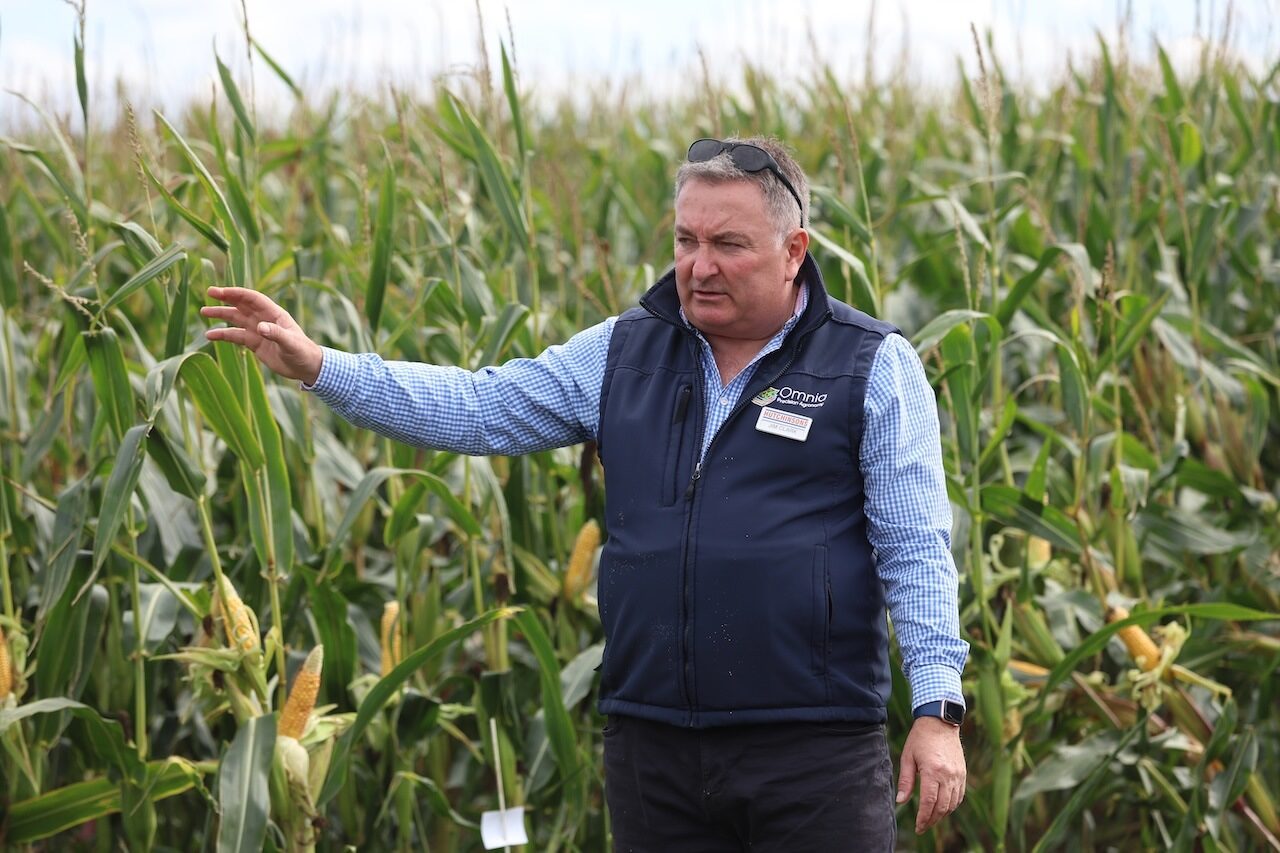
More attention needs to be given to maize nutrition planning, as some crops are potentially
being under-fed, thereby compromising yield, warns leading agronomy firm Hutchinsons.
Modern, high-yielding maize varieties can be very “hungry” for nutrients and trace elements
throughout the season, yet crop demands are sometimes not being met, Cumbria-based
agronomist, Jim Clark, and Hutchinsons crop nutrition manager, Tim Kerr suggest.
“I do believe that many growers are still under-feeding maize, and in dry years such as 2025,
it can be particularly challenging to ensure crops take up enough nutrition from the soil
alone,” says Mr Clark.
Indeed, leaf testing at the Hutchinsons Carlisle maize trials site in late August last season
showed issues with nitrogen, potash, and manganese, probably due to plants being unable
to extract sufficient nutrients from dry soils, he notes.
The risks of nutrient deficiency are often exacerbated in dry seasons, however issues can –
and do – still arise even when moisture is not limited, so nutritional programmes must be
planned carefully to meet crop demands in every situation, he says.
“Traditionally, where maize is grown on mixed or predominantly livestock farms, nutritional
demands are largely met with slurry or manure,” adds Mr Kerr. “However, depending on
individual situations, you might well need to supplement these requirements, particularly if
you’re growing maize in an arable situation.”
Nutrient planning
The importance of potash is often understated, commonly because the expectation is that
applied manures will meet crop requirement, Mr Kerr continues. However, a high yielding
crop of maize will need 8 kg/ha per day during peak growth, and will require in excess of
400 kg/ha in total in order to maintain yield potential.
“It is therefore really important to ensure there is sufficient potash present and available to
meet this demand.”
Other macro and micro nutrients are important too, and Mr Clark says the three to six leaf
stage is a key timing for nutrition, to keep plants green and growing. “People are often
putting herbicides and trace elements on at this timing. Leaf testing at this stage last year
showed some crops were short of manganese, so this was included in applications.
“Some herbicides can be quite strong though, so growers need to check product
compatibility and crop safety before adding other things to the tank,” he advises.
“Last season, some growers did go back with a separate application after applying
herbicides, purely to apply trace elements to push maize on.”
Related news: