
- With wetter winters predicted, farmers need a broader range of tools to adapt to the shifting landscape
- As a result, more flexible crop varieties with extended drilling windows are an appealing alternative
Wheat varieties that can be sown from October through to April – after maize, potatoes, root crops, and vegetables – are seeing increased uptake.
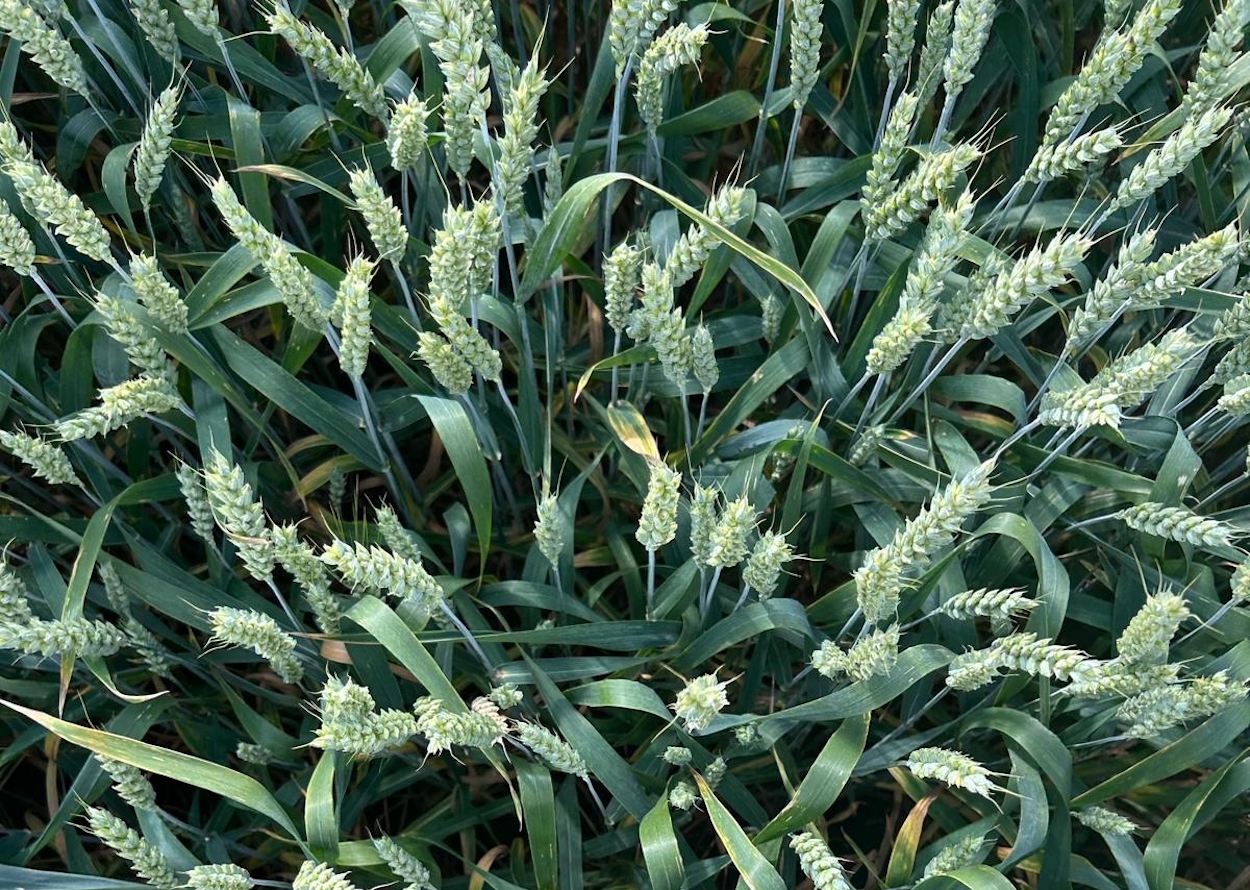
Everlong from COPE is a group 4 feed wheat with the highest yield and specific weight of any spring wheat on the Recommended List (RL), a strong disease resistance, and provides farmers with the ‘full package’. With a wide drilling window, it’s a new option for late autumn-drilled wheat or as a true spring wheat option for the feed market.
Lincolnshire farmer, Colin Chappell, planted Everlong in April 2024, after the wettest winter his farm had ever seen. “By 10 April 2024, 85% of crops still needed to be drilled, due to a succession of storms kicked off by storm Babet in October 2023,” he says.
“We wanted 5 or 6 days clear of rainfall and we didn’t get it until April. Much of the cropping area was in standing water until that point – it was a terrible year. I had to replant 35 hectares of winter wheat for Warburtons – and one field three times, after it got flooded out twice over the winter.
“Many farmers were planting spring barley following the wet winter, and due to my uncertainty about the resulting barley price, I opted for an alternative spring wheat, grown as a seed crop for COPE,” says Colin.
Colin planted 15.5 hectares of Everlong on 28 April 2023 and was pleased with the results. “Everlong went well into to heavy clay soils that had been flooded but started to clear. It felt very late to plant, but the seed bounced out of the ground and was away quickly.
“In terms of nutrition it received early nitrogen (N) on the seed bed, then manganese, zinc, and phosphite, which was repeated, and at tillering it had a second dose of nitrogen to total 150 kilos of N/ha.
“Then as the crop came through, it had phosphate, zinc, a bit of herbicide, a fungicide at tillering, and a second fungicide treatment for fusarium 4.5 weeks later, due to it being a seed crop,” he says.
Colin harvested Everlong on 21 September, and it was the last crop to go through the combine. It yielded 5t/ha. “It was a high-quality crop with high specific weight of 80kg/hl, and a protein level of 13.9% which is unheard of for a group 4 with only 150 kilos of nitrogen,” says Colin.
“Everlong performed well, and it was easy to grow, it’s also a nice bold yellow colour when it’s ripened in the field – which, after the year we had, was some comfort. If we keep getting this unseasonal weather, alternative spring wheat will be in demand. It’s a strong back-up option,” adds Colin.
Gemma Clarke, managing director at COPE – representatives of the variety, Everlong, says the trial and on-farm results continue to be encouraging. “It’s clean, easy to manage, and produces the boldest grain of any spring wheat,” she says.
From 2024 Agrii alternative wheat trials, Everlong demonstrated strong performance and in the AHDB Recommended List trials, Everlong had the highest treated yield and specific weight. In the Agrii Throws untreated spring wheat trials site, Everlong demonstrated exceptional disease resistance, achieving a yellow rust score of 1 and a brown rust score of 2, indicating very low levels of disease compared to other varieties, where lower scores reflect better performance.
Related news: