
- Water health and soil carbon opportunities discussed at Lincolnshire Miscanthus farm walk Soil, water, and air quality recovery will be discussed alongside carbon trading at a Miscanthus farm walk in Louth, Lincolnshire at two consecutive farm walks in January and February 2022
The events, co-hosted by Anglian Water and Miscanthus specialist, Terravesta , will look at practical steps for farmers to benefit wildlife and profit from nature recovery, with an additional focus on carbon trading from carbon standard pioneers, Agreena
Through new government schemes, including the Landscape Recovery Scheme, the Sustainable Farming Incentive, and Local Nature Recovery, long-term, large-scale, and ecosystem recovery projects will be put in place across the UK, and this event will provide farmers with information on some specific aspects of natural capital management.
The low input carbon negative crop Miscanthus is hailed as a robust diversification option for an arable or mixed enterprise and has proven benefits to soil restoration and fertility, increasing soil carbon and organic matter naturally, restoring soil life, and slowing flooding, thereby preventing runoff and sedimentation into our critical waterways.
“The first dedicated, independent, peer-reviewed study into the Miscanthus carbon life cycle shows that the crop is net carbon negative, capturing net 2.35 tonnes CO2e per hectare, per year in the soil at the very least,” explains Alex Robinson, Terravesta chief operating officer.
The event will look at ways farmers can harness new opportunities to future-proof their businesses.
Anglian Water’s senior agronomy advisor, Richard Reynolds says Miscanthus can benefit water quality. “I believe that Miscanthus can offer farmers a useful and cost-effective long-term crop which mitigate the water quality risks we see – including nutrient and pesticide loss, and soil erosion.
“Anglian Water believes that Miscanthus has a role to plan in many farm rotations and compares well in the long term to other biofuel crops,” says Richard.
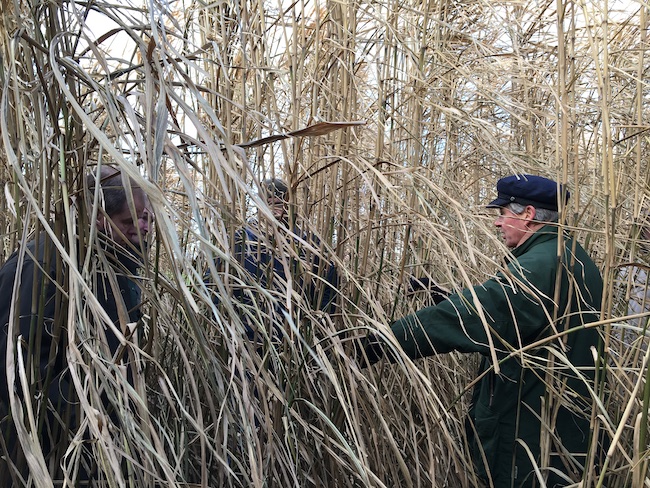
The host of the walk is arable farmer, Peter Strawson, who grows 34 hectares of Terravesta AthenaTM Miscanthus on his outlying land.
“The Miscanthus is on good quality land but it’s outlying, meaning the combine etc has to be moved a long way, so it’s not practical or cost-effective to grow cereals on it.
“The agricultural sector is hopelessly uncertain, and with Miscanthus you have some most welcome long-term assurance. Generally, Miscanthus takes care of itself after its establishment and you don’t have to supervise or cultivate it.
“You don’t need sophisticated machinery to harvest it and local contractors are experienced with the crop.”
To book and find out more about the Louth Miscanthus farm walks visit Terravesta’s events page www.terravesta.com/events