
- The term ‘regenerative agriculture’ has become the latest buzz phrase to sweep through farming. To some, it is a new approach that points to a future where synthetic pesticides and manufactured fertilisers are replaced with a culture of friendly bacteria working in harmony with Mother Nature
- To others, it’s a just a trendy way of describing a system that has been practiced since man began tilling the land, ‘mixed farming’ where livestock and a broad rotation support a functional and resilient soil
- For Agrii agronomist John Vickery the first question to consider before moving to a new system is to define your objective, ‘what is it you want to achieve?’, he says. Highlighting that the outcome, rather than the process, should be the priority
Whichever camp you fall into, the principles that support regenerative agriculture represent a path to a more sustainable future. One that reflects the financial, regulatory, and climatic pressures facing the sector without compromising profitability.
Few would object to a future with less reliance on synthetic chemistry or inorganic fertilisers but journeying to this farming nirvana is not without its considerations and compromises.
It is how to achieve or sustain this situation that is most often the topic of debate.
“Many systems, be it regenerative agriculture or something else, offer the promise of a less intensive approach without a material impact on profitability. Where this is practiced successfully, we see that there are significant savings to be made from fixed costs through lower establishment and labour expenses,” says Mr. Vickery.
While the desire to create a more functional soil and reduce production costs may be the driver in the short-term, the need to adapt systems to fit future environmental schemes and regulations should also be considered.
“It is clear from the proposals outlined by DEFRA that the schemes that succeed the CAP will focus more on environmental delivery. We see the principles of regenerative agriculture as closely aligned with much of what is proposed in the Environmental Land Management Scheme (ELMS), for example,” says Mr. Vickery.
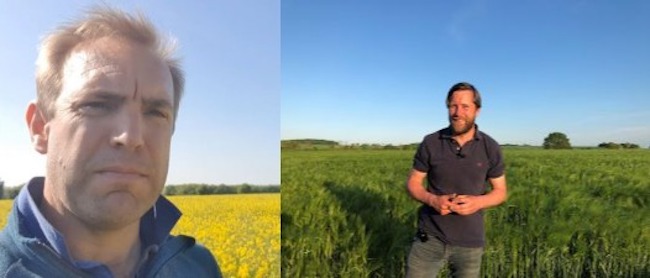
Both John Vickery and Tom Martin were talking about their experience of regenerative agriculture on the Agrii Tramlines podcast which can be downloaded from Google Podcasts, Spotify or Apple Podcasts.