
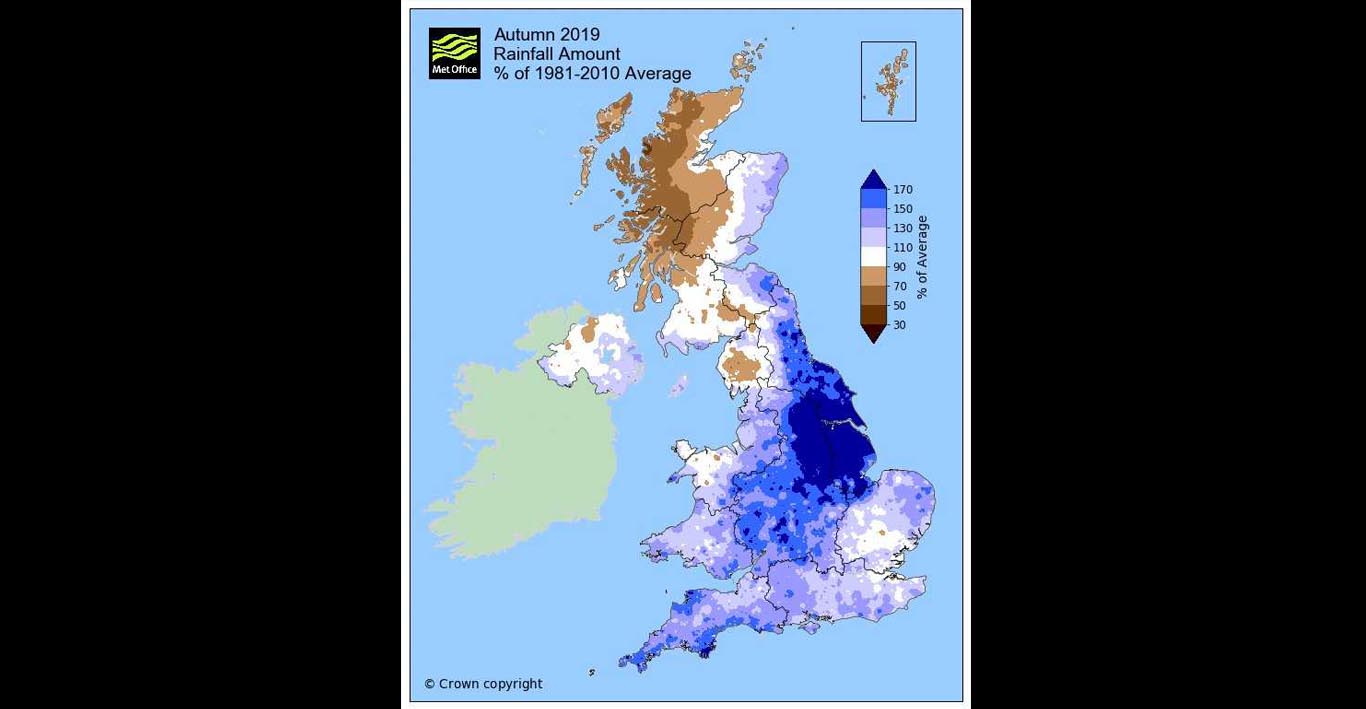
To nobody’s great surprise, figures from the Met Office confirm that the autumn was unusually wet across much of England and Wales, although not so much in Scotland and Northern Ireland. Across England, it was the wettest autumn since 2000 and the fifth wettest since 1910. This came on the back of the seventh wettest summer on record across the UK as a whole and meant the ground was saturated across much of the country. Some prime arable land in Yorkshire and Lincolnshire was particularly badly affected.
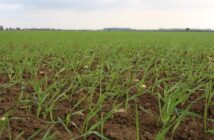
For cereals and oilseeds, the rains came late enough that they didn’t have a big impact on this summer’s harvest. However, it is a different story for drilling and establishment of winter crops. Most oilseed rape was in the ground before the worst of the deluge, although the area is probably the smallest since 2000. The crop has struggled to establish, though, with ADAS rating a quarter of crops as in poor or very poor condition at the end of November.
The condition of any cereals crops which have been drilled is not great either but the big concern is how little has actually been planted. AHDB estimates a 9% decline in the intended wheat area and a 12% fall for winter barley. However, ADAS estimates that only 60-70% of the intended area was sowed by the end of November. UK grains had been cheap relative to global markets, due to the need to generate export demand but since September, nearby prices have increased by £10/tonne, despite a stronger pound, while forward prices for the 2020 crop have increased even more.
The weather has also caused problems for the potato harvest, which was underway when the heavens opened. Some crops have been left in the ground because it was too wet to harvest, while there are concerns about the quality of potatoes in store. That has contributed to a faster rise in prices than is normal at this time of year.
Issues for livestock sectors are less severe but cattle and sheep will have had to be housed earlier than normal. That isn’t a big problem for now, as there is plenty of good-quality silage available, but it could create challenges on the other side of winter if turnout is delayed.
All of these concerns will add to the pressure on the machinery market. This was showing signs of a downturn anyway but it has become even more obvious recently. Having held up reasonably well in the first half of the year, machinery deliveries reported by AEA members have declined sharply since the summer. This is true across a wide range of equipment types, suggesting a mix of factors are at play but the weather is certainly one of them.